| |
Date |
Event(s) |
| 1 | 1721 | - 3 Apr 1721—11 Feb 1742: Sir Robert Walpole - 1st British Prime Minister
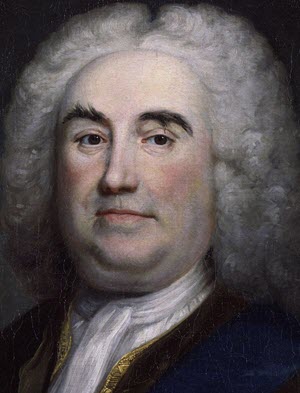
In the wake of the South Sea Bubble financial crisis, Walpole became First Lord of the Treasury and Chancellor of the Exchequer. He never held the title 'Prime Minister,' but was given the powers that came to be associated with the office. George I also gave him 10 Downing Street, still the official residence of the prime minister.
|
| 2 | 1727 | - 11 Jun 1727—25 Oct 1760: King George II's reign
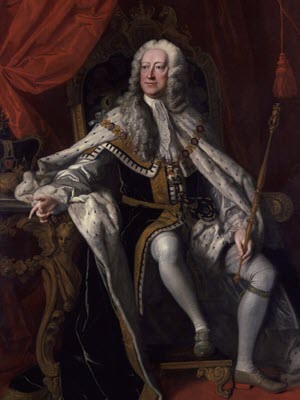
George IIexercised little control over British domestic policy, which was largely controlled by the Parliament of Great Britain. As elector, he spent twelve summers in Hanover, where he had more direct control over government policy.
During the War of the Austrian Succession, George participated at the Battle of Dettingen in 1743, and thus became the last British monarch to lead an army in battle. In 1745, supporters of the Catholic claimant to the British throne, James Francis Edward Stuart ("The Old Pretender"), led by James's son Charles Edward Stuart ("The Young Pretender" or "Bonnie Prince Charlie"), attempted and failed to depose George in the last of the Jacobite rebellions.
|
| 3 | 1736 | - 1736: James Watt born

James Watt was a Scottish inventor, mechanical engineer, and chemist who improved on Thomas Newcomen's steam engine with his Watt steam engine in 1776, which was fundamental to the changes brought by the Industrial Revolution in both his native Great Britain and the rest of the world.
While working as an instrument maker at the University of Glasgow, Watt became interested in the technology of steam engines. He realised that contemporary engine designs wasted a great deal of energy by repeatedly cooling and reheating the cylinder. Watt introduced a design enhancement, the separate condenser, which avoided this waste of energy and radically improved the power, efficiency, and cost-effectiveness of steam engines.
Watt attempted to commercialise his invention, but experienced great financial difficulties until he entered a partnership with Matthew Boulton in 1775. The new firm of Boulton and Watt was highly successful and Watt became a wealthy man.
|
| 4 | 1742 | - 16 Feb 1742—27 Jul 1743: Earl of Wilmington - 2nd British Prime Minister

Spencer Compton, 1st Earl of Wilmington, KG, PC was a British Whig statesman who served continuously in government from 1715 until his death. He served as the Prime Minister from 1742 until his death in 1743. He is considered to have been Britain's second Prime Minister, after Sir Robert Walpole, but worked closely with the Secretary of State, Lord Carteret, in order to secure the support of the various factions making up the Government.
|
| 5 | 1743 | - 27 Aug 1743—6 Mar 1754: Henry Pelham - 3rd British Prime Minister
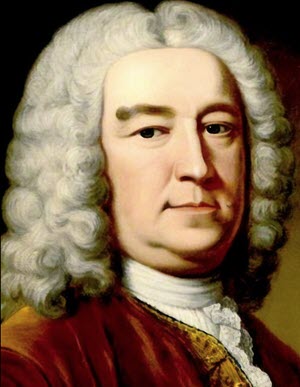
Henry Pelham was a British Whig statesman, who served as Prime Minister of Great Britain from 27 August 1743 until his death.
Pelham's premiership was relatively uneventful in terms of domestic affairs, although it was during his premiership that Great Britain experienced the tumult of the 1745 Jacobite uprising. In foreign affairs, Great Britain fought in several wars. Upon Pelham's death, his brother Newcastle took full control of the ministry.
|
| 6 | 1749 | - 21 Jun 1749: Founding of Halifax

Edward Cornwallis arrived in Chebucto harbour in advance of 2,567 settlers. Work began on the town of Halifax, which replaced Annapolis Royal as the capital of Nova Scotia and established a strong British foothold in Nova Scotia.
Text and image © The Canadian Encyclopedia
|
| 7 | 1750 | - 1750: Highland Clearances begin

Highland Clearances: from the 1750s, landlords in the Scottish Highlands began to forcibly remove tenants from their land, usually to replace them with more profitable sheep farming. The clearances resulted in whole Highland communities leaving Scotland and emigrating, most of them to North America. Many others moved to growing urban industrial centres such as Glasgow
- 1750: Sir Joseph Banks born

Sir Joseph Banks was an English naturalist and botanist whose work paved the way for future-botanists. After inheriting a vast family fortune he could chase his passion, and went on to explore previously uncharted territories. He embarked on a voyage with James Cook aboard HMS Endeavour and returned with a major collection of specimens.
Banks advocated British settlement in New South Wales and colonisation of Australia, as well as the establishment of Botany Bay as a place for the reception of convicts, and advised the British government on all Australian matters. He is credited with introducing the eucalyptus, acacia, and the genus named after him, Banksia, to the Western world. Approximately 80 species of plants bear his name.
|
| 8 | 1754 | - 16 Mar 1754—11 Nov 1756: Duke of Newcastle - 4th British Prime Minister

Thomas Pelham-Holles, 1st Duke of Newcastle upon Tyne and 1st Duke of Newcastle-under-Lyme, was a British Whig statesman, whose official life extended throughout the Whig supremacy of the 18th century. He is commonly known as the Duke of Newcastle. Historian Harry Dickinson says that he became, "Notorious for his fussiness and fretfulness, his petty jealousies, his reluctance to accept responsibility for his actions, and his inability to pursue any political objective to his own satisfaction or to the nations profit ... Many modern historians have depicted him as the epitome of unredeemed mediocrity and as a veritable buffoon in office."
|
| 9 | 1755 | - 28 Jul 1755: Expulsion of the Acadians

Acadian delegates who refused the oath of allegiance were dispersed from Minas, and over the next few months most of the Acadian population of Nova Scotia was rounded up and transported away. About one half of the Acadians perished.
Text and image © The Canadian Encyclopedia
|
| 10 | 1756 | - 16 Nov 1756—29 Jun 1757: Duke of Devonshire - 5th British Prime Minister

William Cavendish, 4th Duke of Devonshire, styled Lord Cavendish before 1729 and Marquess of Hartington between 1729 and 1755, was a British Whig statesman and nobleman who was briefly nominal Prime Minister of Great Britain. The Seven Years' War was going badly for Britain under the leadership of the Duke of Newcastle and when he resigned in October 1756, George II eventually asked Devonshire to form an administration. Devonshire accepted on the condition that his tenure would last only until the end of the parliamentary session. Devonshire believed his duty to the King required an administration capable of prosecuting the war successfully.
|
| 11 | 1757 | - 29 Jun 1757—26 May 1762: Duke of Newcastle - 6th British Prime Minister
Thomas Pelham-Holles, 1st Duke of Newcastle upon Tyne and 1st Duke of Newcastle-under-Lyme, was a British Whig statesman, whose official life extended throughout the Whig supremacy of the 18th century. He is commonly known as the Duke of Newcastle. Historian Harry Dickinson says that he became, "Notorious for his fussiness and fretfulness, his petty jealousies, his reluctance to accept responsibility for his actions, and his inability to pursue any political objective to his own satisfaction or to the nations profit ... Many modern historians have depicted him as the epitome of unredeemed mediocrity and as a veritable buffoon in office."
|
| 12 | 1759 | - 13 Sep 1759: Battle of the Plains of Abraham

On the night of Sept 12-13, General James Wolfe led his soldiers up an unguarded footpath and set for battle before the fortress walls. Montcalm attacked in the morning but his line broke, and Québec fell into British hands. Both generals perished.
Text and image © The Canadian Encyclopedia
|
Webmaster Message
I make every effort to document my research. If you have something you would like to add, please contact me.


 1736 - 1759 (23 years)

