| |
Date |
Event(s) |
| 1 | 1760 | - 25 Oct 1760—29 Jan 1820: King George III's reign

George III was the third British monarch of the House of Hanover, but unlike his two predecessors, he was born in Great Britain, spoke English as his first language, and never visited Hanover. His reign was marked by a series of military conflicts involving his kingdoms, much of the rest of Europe, and places farther afield. Early in his reign, Great Britain defeated France in the Seven Years' War, becoming the dominant European power in North America and India. However, many of Britain's American colonies were soon lost in the American War of Independence. Further wars against revolutionary and Napoleonic France from 1793 concluded in the defeat of Napoleon at the Battle of Waterloo in 1815.
Later in life, George III had recurrent mental illness. After a final relapse in 1810, a regency was established, and George III's eldest son, George, Prince of Wales, ruled as Prince Regent.
|
| 2 | 1801 | - 4 Mar 1801—4 Feb 1809: Thomas Jefferson - 3rd US President
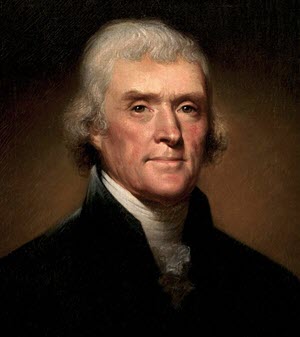
Thomas Jefferson (April 13, [O.S. April 2] 1743 – July 4, 1826) was a statesman, diplomat, architect, and Founding Father who served as the third president of the United States from 1801 to 1809.
The principal author of the Declaration of Independence, Jefferson was a proponent of democracy, republicanism, and individual rights motivating American colonists to break from the Kingdom of Great Britain and form a new nation.
Jefferson pursued the nation's shipping and trade interests against Barbary pirates and aggressive British trade policies. He also organized the Louisiana Purchase, almost doubling the country's territory. His second term was beset with difficulties at home, including the trial of former VP Aaron Burr. American foreign trade was diminished when Jefferson implemented the Embargo Act of 1807, responding to British threats to US shipping. In 1803, Jefferson began a controversial process of Indian tribe removal to the newly organized Louisiana Territory, and he signed the Act Prohibiting Importation of Slaves.
|
| 3 | 1803 | - 1803—1815: Napoleonic Wars

The Napoleonic Wars were a series of major conflicts pitting the French Empire and its allies, led by Napoleon I, against a fluctuating array of European powers formed into various coalitions, financed and usually led by the United Kingdom. The wars stemmed from the unresolved disputes associated with the French Revolution and its resultant conflict
|
| 4 | 1807 | - 31 Mar 1807—4 Oct 1809: Duke of Portland - 20th British Prime Minister

William Henry Cavendish Cavendish-Bentinck, 3rd Duke of Portland, (14 April 1738 – 30 October 1809) was a British Whig and Tory politician during the late Georgian era. He served twice as British prime minister, of Great Britain (1783) and then of the United Kingdom (1807–09). The twenty-four years between his two terms as Prime Minister is the longest gap between terms of office of any British prime minister.
During his tenure the Treaty of Paris was signed formally ending the American Revolutionary War. The government was brought down after losing a vote in the House of Lords on its proposed reform of the East India Company after George III had let it be known that any peer voting for this measure would be considered his personal enemy.
|
| 5 | 1809 | - 4 Mar 1809—4 Mar 1817: James Madison - 4th US President

James Madison Jr (March 16, 1751 – June 28, 1836)[1] was an American statesman and Founding Father who served as the fourth president of the United States from 1809 to 1817. He is hailed as the "Father of the Constitution" for his pivotal role in drafting and promoting the United States Constitution and the Bill of Rights.
After the failure of diplomatic protests and a trade embargo against the United Kingdom, he led the US into the War of 1812. The war was an administrative morass, as the United States had neither a strong army nor a robust financial system. As a result, Madison came to support a stronger national government and military, as well as the national bank, which he had long opposed. Historians have generally ranked Madison as an above-average president.
- 4 Oct 1809—11 May 1812: Spencer Perceval - 21st British Prime Minister

Spencer Perceval (1 November 1762 – 11 May 1812) was a British statesman who served as Prime Minister of the United Kingdom from October 1809 until his assassination in May 1812.[1] Perceval is the only British prime minister to have been murdered. He was also the only Solicitor General or Attorney General to become Prime Minister.
Perceval faced a number of crises during his term in office, including an inquiry into the Walcheren expedition, the madness of King George III, economic depression and Luddite riots. He overcame these crises, successfully pursued the Peninsular War in the face of opposition defeatism, and won the support of the Prince Regent. His position was looking stronger by early 1812, when, in the lobby of the House of Commons, he was assassinated by a merchant with a grievance against his government.
|
| 6 | 1811 | - 12 Jun 1811: Selkirk's Red River Grant

The Hudson's Bay Company granted an area of about 185 000 km² to Lord Selkirk for formation of a colony at Red River. His first settlers arrived in the summer of 1812. Despite tribulations the settlement grew into the first European colony in the North-West.
Text and image © The Canadian Encyclopedia
|
| 7 | 1812 | - 1812: Charles Dickens

Charles Dickens is famous for his novels that touch upon the sensitive issues of poverty, child labour, and slavery. During a time when poverty was rife he had the courage to voice his opposition. Most of the characters in his novels are based on people he was acquainted with. This includes his own parents, who were the models for characters Mr & Mrs Micawber in ‘David Copperfield’
- 8 Jun 1812—9 Apr 1827: Earl of Liverpool - 22nd British Prime Minister

Robert Banks Jenkinson, 2nd Earl of Liverpool, (7 June 1770 – 4 December 1828) was a British statesman and Prime Minister (1812–27). As Prime Minister, Liverpool called for repressive measures at domestic level to maintain order after the Peterloo Massacre of 1819. He dealt smoothly with the Prince Regent when King George III was incapacitated. He also steered the country through the period of radicalism and unrest that followed the Napoleonic Wars. He favoured commercial and manufacturing interests as well as the landed interest. He sought a compromise of the heated issue of Catholic emancipation. The revival of the economy strengthened his political position. By the 1820s he was the leader of a reform faction of "Liberal Tories" who lowered the tariff, abolished the death penalty for many offences, and reformed the criminal law.
- 18 Jun 1812—17 Feb 1815: The War of 1812

The War of 1812 was a conflict fought between the United States and the United Kingdom, and their respective allies from June 1812 to February 1815. Historians in Britain often see it as a minor theater of the Napoleonic Wars; in the United States and Canada, it is seen as a war in its own right.
Peace negotiations began in August 1814, and the Treaty of Ghent was signed on December 24. News of the peace did not reach America for some time. Unaware of the treaty, British forces invaded Louisiana and were defeated at the Battle of New Orleans in January 1815. These late victories were viewed by Americans as having restored national honour, leading to the collapse of anti-war sentiment and the beginning of the Era of Good Feelings, a period of national unity. News of the treaty arrived shortly thereafter, halting military operations. The treaty was unanimously ratified by the US Senate on February 17, 1815, ending the war with no boundary changes.
- 13 Oct 1812: Battle of Queenston Heights

Americans crossed the Niagara River and attacked the high ground of Queenston Heights. His sword drawn, Major-General Brock led troops into battle and was fatally wounded. The battle essentially lost, Grand River Mohawk warriors led by John Norton (Teyoninhokarawen) prevented American forces from retreating for several hours until reinforcements led by Major-General Roger Sheaffe arrived and forced over 1,000 American soldiers to surrender.
Text and image © The Canadian Encyclopedia
|
| 8 | 1813 | - 1813: Henry Bessemer born

Sir Henry Bessemer was an English inventor, whose steel-making process would become the most important technique for making steel in the nineteenth century for almost one century from 1856 to 1950. He also played a significant role in establishing the town of Sheffield as a major industrial centre.
Bessemer had been trying to reduce the cost of steel-making for military ordnance, and developed his system for blowing air through molten pig iron to remove the impurities. This made steel easier, quicker and cheaper to manufacture, and revolutionized structural engineering. Bessemer also made over 100 other inventions in the fields of iron, steel and glass and profited financially from their success.
|
| 9 | 1815 | - Mar 1815: Corn Laws
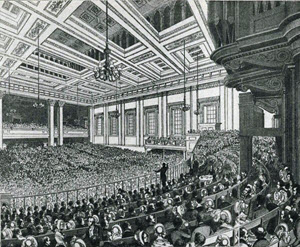
The Corn Laws were tariffs and trade restrictions on imported food and grain ("corn") enforced in Great Britain between 1815 and 1846. They were designed to keep grain prices high to favour domestic producers and imposed steep import duties, making it too expensive to import grain from abroad, even when food supplies were short.
The laws became the focus of opposition from urban groups who had far less political power than rural Britain. The Irish famine of 1845–1852 forced a resolution because of the urgent need for new food supplies. Prime Minister Sir Robert Peel, a Conservative, achieved repeal with the support of the Whigs in Parliament, overcoming the opposition of most of his own party.
- 17 Jun 1815—5 Dec 1815: Second Barbary War

The Second Barbary War (1815) was fought between the United States and the North African Barbary Coast states of Tripoli, Tunis, and Ottoman Algeria. The war ended when the United States Senate ratified Commodore Stephen Decatur’s Algerian treaty on December 5, 1815. However, Dey Omar Agha of Algeria repudiated the US treaty, refused to accept the terms of peace that had been ratified by the Congress of Vienna, and threatened the lives of all Christian inhabitants of Algiers. William Shaler was the US commissioner in Algiers who had negotiated alongside Decatur, but he had to flee aboard British vessels and watch rockets and cannon shot fly over his house "like hail" during the Bombardment of Algiers (1816). He negotiated a new treaty in 1816 which was not ratified by the Senate until February 11, 1822 because of an oversight.
- 18 Jun 1815: Battle of Waterloo
The Battle of Waterloo was fought near Waterloo in present-day Belgium. A French army under the command of Emperor Napoleon Bonaparte was defeated by two of the armies of the Seventh Coalition: a British-led Allied army under the command of the Duke of Wellington, and a Prussian army under the command of Gebhard Leberecht von Blücher, Prince of Wahlstatt. The battle marked the end of the Napoleonic Wars
- 10 Dec 1815: Ada Lovelace born

Augusta Ada King, Countess of Lovelace (née Byron) was an English mathematician and writer, known for her work on Charles Babbage's mechanical general-purpose computer, the Analytical Engine. She was the first to recognise that the machine had applications beyond pure calculation, and published the first algorithm intended to be carried out by such a machine. As a result, she is sometimes regarded as the first to recognise the full potential of a "computing machine" and the first computer programmer.
Lovelace was the only legitimate child of the poet Lord Byron and his wife Anne Isabella "Annabella" Milbanke, Lady Wentworth. Ada translated an article by Italian military engineer Luigi Menabrea, on the Babbage engine, supplementing it with a set of notes, which contain what many consider to be the first computer program, an algorithm designed to be carried out on the engine, if it had ever been built.
|
| 10 | 1817 | - 4 Mar 1817—4 Mar 1825: James Monroe - 5th US President

James Monroe (April 28, 1758 – July 4, 1831) was an American statesman and Founding Father who served as the fifth president of the United States from 1817 to 1825. He is perhaps best known for his foreign policy principle, known as the "Monroe Doctrine", which disallowed further European colonization of the Americas (beginning in 1823).
he sought to ease partisan tensions, embarking on a tour of the country that was well received. Monroe sought to appease the antagonisms and bridge the divisions that had marked American political life since the War of 1812, quietly using his influence as president to encourage compromises and endorsing a consensual form of American patriotism. This method of leadership led historian William E. Weeks to name him the first American "hidden hand president" in reference to Eisenhower's similar practices
|
| 11 | 1818 | - 24 Dec 1818: James Joule born

James Prescott Joule (24 December 1818 – 11 October 1889) was an English physicist, mathematician and brewer, born in Salford, Lancashire. Joule studied the nature of heat, and discovered its relationship to mechanical work. This led to the law of conservation of energy, which in turn led to the development of the first law of thermodynamics. The SI derived unit of energy, the joule, is named after him.
Joule worked with Lord Kelvin to develop an absolute thermodynamic temperature scale, which came to be called the Kelvin scale. Joule also made observations of magnetostriction, and he found the relationship between the current through a resistor and the heat dissipated, which is also called Joule's first law. His experiments about energy transformations were first published in 1843.
|
| 12 | 1820 | - 29 Jan 1820—26 Jun 1830: King George IV's reign

George IV was King of the United Kingdom of Great Britain and Ireland and King of Hanover following the death of his father, King George III, on 29 January 1820, until his own death ten years later. From 1811 until his accession, he served as Prince Regent during his father's final mental illness.
George IV led an extravagant lifestyle that contributed to the fashions of the Regency era. He was a patron of new forms of leisure, style and taste. He commissioned John Nash to build the Royal Pavilion in Brighton and remodel Buckingham Palace, and Sir Jeffry Wyattville to rebuild Windsor Castle.
His charm and culture earned him the title "the first gentleman of England", but his dissolute way of life and poor relationships with his parents and his wife earned him the contempt of the people and dimmed the prestige of the monarchy.
- 12 May 1820: Florence Nightingale born

Florence Nightingale, (12 May 1820 – 13 August 1910) was an English social reformer and statistician, and the founder of modern nursing.
Nightingale came to prominence while serving as a manager and trainer of nurses during the Crimean War, in which she organised care for wounded soldiers. She gave nursing a favourable reputation and became an icon of Victorian culture, especially in the persona of "The Lady with the Lamp" making rounds of wounded soldiers at night. In 1860, Nightingale laid the foundation of professional nursing with the establishment of her nursing school at St Thomas' Hospital in London.
|
| 13 | 1822 | - 27 Dec 1822: Louis Pasteur born

Louis Pasteur (December 27, 1822 – September 28, 1895) was a French biologist, microbiologist and chemist renowned for his discoveries of the principles of vaccination, microbial fermentation and pasteurization. His discoveries have saved many lives. He reduced mortality from puerperal fever, and created the first vaccines for rabies and anthrax. His medical discoveries provided direct support for the germ theory of disease and its application in clinical medicine. He is best known to the general public for his invention of the technique of treating milk and wine to stop bacterial contamination, a process now called pasteurization.
|
| 14 | 1824 | - 26 Jun 1824: Sir William Thomson Lord Kelvin born

William Thomson, 1st Baron Kelvin, (26 June 1824 – 17 December 1907) was a Scots-Irish mathematical physicist and engineer who was born in Belfast. At the University of Glasgow he did important work in the mathematical analysis of electricity and formulation of the first and second laws of thermodynamics, and did much to unify the emerging discipline of physics in its modern form. He also had a career as an electric telegraph engineer and inventor, which propelled him into the public eye and ensured his wealth, fame and honour. He had extensive maritime interests and was most noted for his work on the mariner's compass, which previously had limited reliability.
Absolute temperatures are stated in units of kelvin in his honour.
|
| 15 | 1825 | - 4 Mar 1825—4 Mar 1829: John Quincy Adams - 6th US President

John Quincy Adams (July 11, 1767 – February 23, 1848) was an American statesman who served as the sixth president of the United States from 1825 to 1829.
Adams called for an ambitious agenda that included federally-funded infrastructure projects, the establishment of a national university, and engagement with the countries of Latin America, but many of his initiatives were defeated in Congress. During his presidency, the Democratic-Republic Party polarized into two major camps: the National Republican Party, supported President Adams, and the Democratic Party, led by Andrew Jackson. The Democrats proved to be more effective political organizers and Jackson decisively defeated Adams in the 1828 presidential election
- 27 Sep 1825: Stockton and Darlington railway - World's First

The Stockton and Darlington Railway (S&DR) was a railway company that operated in north-east England from 1825 to 1863. The world's first public railway to use steam locomotives, its first line connected collieries near Shildon with Stockton-on-Tees and Darlington, and was officially opened on 27 September 1825. The movement of coal to ships rapidly became a lucrative business, and the line was soon extended to a new port and town at Middlesbrough. While coal wagons were hauled by steam locomotives from the start, passengers were carried in coaches drawn by horses until carriages hauled by steam locomotives were introduced in 1833.
|
| 16 | 1827 | - 5 Apr 1827: Joseph Lister born

Joseph Lister, 1st Baron Lister, (5 April 1827 – 10 February 1912), was a British surgeon and a pioneer of antiseptic surgery. He promoted the idea of sterile surgery while working at the Glasgow Royal Infirmary. Lister successfully introduced carbolic acid (now known as phenol) to sterilise surgical instruments and to clean wounds.
Applying Louis Pasteur's advances in microbiology, Lister championed the use of carbolic acid as an antiseptic, so that it became the first widely used antiseptic in surgery. He first suspected it would prove an adequate disinfectant because it was used to ease the stench from fields irrigated with sewage waste.
Lister's work led to a reduction in post-operative infections and made surgery safer for patients, distinguishing him as the "father of modern surgery".
- 12 Apr 1827—8 Aug 1827: George Canning - 23rd British Prime Minister

George Canning (11 April 1770 – 8 August 1827) was a British Tory statesman who served as Prime Minister of the United Kingdom from April to August 1827. He occupied various senior cabinet positions under numerous prime ministers, before eventually serving himself as Prime Minister for the final four months of his life.
He died after a mere 119 days in office which, to this day, remains the shortest tenure of any British Prime Minister.
- 31 Aug 1827—8 Jan 1828: Viscount Goderich - 24th British Prime Minister

Frederick John Robinson, 1st Earl of Ripon, (1 November 1782 – 28 January 1859), known as The Viscount Goderich between 1827 and 1833, the name by which he is best known to history, was a British politician during the Regency era. He was Prime Minister of the United Kingdom between August 1827 and January 1828.
When the Prime Minister, George Canning, died in 1827 Goderich succeeded him, but was unable to hold together Canning's fragile coalition of moderate Tories and Whigs. He resigned after 144 days in office, the shortest in history for any British prime minister who did not die in office.
|
Webmaster Message
I make every effort to document my research. If you have something you would like to add, please contact me.


 1808 - 1827 (19 years)

