| |
Date |
Event(s) |
| 1 | 1653 | - 16 Dec 1653—3 Sep 1658: Oliver Cromwell's Protectorate

Oliver Cromwell (25 April 1599 – 3 September 1658) was an English military and political leader. He served as Lord Protector of the Commonwealth of England, Scotland, and Ireland from 1653 until his death, acting simultaneously as head of state and head of government of the new republic.
Cromwell was one of the signatories of King Charles I's death warrant in 1649. He died from natural causes in 1658 and was buried in Westminster Abbey. The Royalists returned to power along with King Charles II in 1660, and they had his corpse dug up, hung in chains, and beheaded.
|
| 2 | 1657 | - 1657: Edmond Halley born
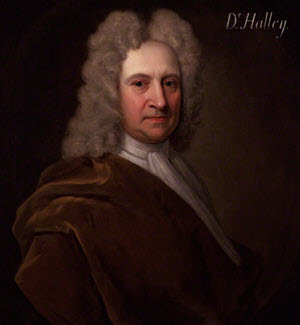
Edmond Halley was a British astronomer and mathematician, known for calculating the orbit of Halley’s Comet. He went St Helena to make a list of the southern stars. He created a catalogue of 341, which he published as ‘Catalogus Stellarum Australium’. It instantly established him as a leading astronomer, earning him a fellowship at the Royal Society and a M.A. degree from Oxford
|
| 3 | 1658 | - 3 Sep 1658—7 May 1659: Richard Cromwell's Protectorate

Richard Cromwell (4 October 1626 – 12 July 1712) became the second Lord Protector of England, Scotland and Ireland, and was one of only two commoners to become the English head of state, the other being his father, Oliver Cromwell, from whom he inherited the post on his father's death. But but he lacked authority and he formally renounced power nine months after succeeding. Without a king-like figure, such as Oliver Cromwell, as head of state the government lacked coherence and legitimacy.
Although a Royalist revolt was crushed by recalled civil war figure General John Lambert, who then prevented the Rump Parliament from reconvening and created a Committee of Safety, he found his troops melted away in the face of General George Monck's advance from Scotland. Monck then presided over the Restoration of 1660.
|
| 4 | 1660 | - 29 May 1660—6 Feb 1685: King Charles II's reign

After the execution of his father, Prince Charles spent the next nine years in exile in France, the Dutch Republic and the Spanish Netherlands. A political crisis that followed the death of Cromwell in 1658 resulted in the restoration of the monarchy, and Charles was invited to return to Britain. On 29 May 1660, his 30th birthday, he was received in London to public acclaim and crowned Charles II. After 1660, all legal documents were dated as if he had succeeded his father as king in 1649.
Charles was one of the most popular and beloved kings of England, known as the Merry Monarch, in reference to both the liveliness and hedonism of his court and the general relief at the return to normality after over a decade of rule by Cromwell and the Puritans. Charles's wife, Catherine of Braganza, bore no live children, but Charles acknowledged at least twelve illegitimate children by various mistresses. He was succeeded by his brother James
|
| 5 | 1665 | - 1665—1666: Great Plague of London

Although the Black Death and had been known in England for centuries, the Great Plague killed an estimated 100,000 people - almost a quarter of London's population - in 18 months. King Charles II and his court left London and fled to Oxford.
At that time, bubonic plague was a much feared disease but its cause was not understood. Some blamed emanations from the earth, "pestilential effluviums", unusual weather, sickness in livestock, abnormal behaviour of animals or an increase in the numbers of moles, frogs, mice or flies. It was not until 1894 that the identification by Alexandre Yersin of its causal agent Yersinia pestis was made and the transmission of the bacterium by rat fleas became known.
|
| 6 | 1666 | - 2 Sep 1666—5 Sep 1666: Great Fire of London

The people of London who had managed to survive the Great Plague of the previous year must have thought that 1666 could only be better, then on 2 September in a bakery near London Bridge, a fire started … the Great Fire of London.
The fire gutted the medieval City of London inside the old Roman city wall. It threatened but did not reach the aristocratic district of Westminster, Charles II's Palace of Whitehall, and most of the suburban slums. It consumed 13,200 houses, 87 parish churches, St Paul's Cathedral, and most of the buildings of the City authorities. It is estimated to have destroyed the homes of 70,000 of the City's 80,000 inhabitants.
The death toll is unknown but was thought to be small, as only six verified deaths were recorded. This has recently been challenged because the deaths of poor and middle-class people were not recorded; moreover, the heat of the fire may have cremated many victims, leaving no recognisable remains.
|
| 7 | 1670 | - 2 May 1670: Hudson's Bay Company Founded

King Charles II of England granted a charter to Prince Rupert and his "Company of Adventurers of England trading into Hudson's Bay." The charter granted the company a monopoly of trade in the Bay and ownership of all lands drained by rivers flowing into the Bay. The Hudson's Bay Company established an English presence in the Northwest and a competitive route to the fur trade centred on Montréal.
Text and image © The Canadian Encyclopedia
(Photo credit: Arthur H. Tweedle / Library and Archives Canada / e002344213)
|
| 8 | 1685 | - 6 Feb 1685—23 Dec 1688: King James II's reign

James II of England and Ireland, and James VII of Scotland reigned from 6 February 1685 until he was deposed in the Glorious Revolution of 1688. He was the last Roman Catholic monarch of England, Scotland and Ireland.
The second surviving son of Charles I, he ascended the throne upon the death of his brother, Charles II. Members of Britain's Protestant political elite suspected him of being pro-French and pro-Catholic and of having designs on becoming an absolute monarch. When he produced a Catholic heir, a son called James, leading nobles called on his Protestant son-in-law and nephew William III of Orange to invade, which he did in the Glorious Revolution of 1688. James fled England. He was replaced by his Protestant daughter Mary. James made one serious attempt to recover his crowns from William and Mary when he landed in Ireland in 1689. After the defeat of the Jacobite forces by the Williamites at the Battle of the Boyne in July 1690, James returned to France.
|
Webmaster Message
I make every effort to document my research. If you have something you would like to add, please contact me.


 1656 - 1688 (32 years)

