| |
Date |
Event(s) |
| 1 | 1727 | - 11 Jun 1727—25 Oct 1760: King George II's reign
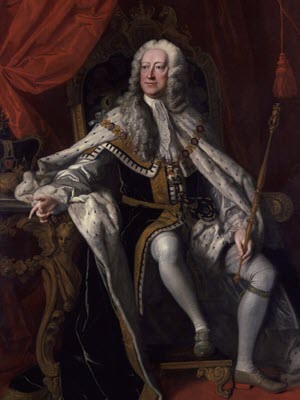
George IIexercised little control over British domestic policy, which was largely controlled by the Parliament of Great Britain. As elector, he spent twelve summers in Hanover, where he had more direct control over government policy.
During the War of the Austrian Succession, George participated at the Battle of Dettingen in 1743, and thus became the last British monarch to lead an army in battle. In 1745, supporters of the Catholic claimant to the British throne, James Francis Edward Stuart ("The Old Pretender"), led by James's son Charles Edward Stuart ("The Young Pretender" or "Bonnie Prince Charlie"), attempted and failed to depose George in the last of the Jacobite rebellions.
|
| 2 | 1743 | - 27 Aug 1743—6 Mar 1754: Henry Pelham - 3rd British Prime Minister
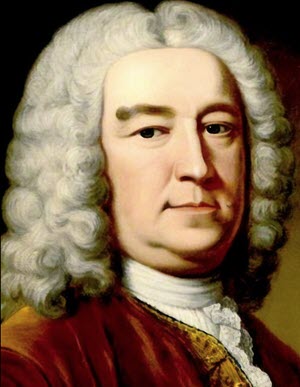
Henry Pelham was a British Whig statesman, who served as Prime Minister of Great Britain from 27 August 1743 until his death.
Pelham's premiership was relatively uneventful in terms of domestic affairs, although it was during his premiership that Great Britain experienced the tumult of the 1745 Jacobite uprising. In foreign affairs, Great Britain fought in several wars. Upon Pelham's death, his brother Newcastle took full control of the ministry.
|
| 3 | 1749 | - 21 Jun 1749: Founding of Halifax

Edward Cornwallis arrived in Chebucto harbour in advance of 2,567 settlers. Work began on the town of Halifax, which replaced Annapolis Royal as the capital of Nova Scotia and established a strong British foothold in Nova Scotia.
Text and image © The Canadian Encyclopedia
|
| 4 | 1750 | - 1750: Highland Clearances begin

Highland Clearances: from the 1750s, landlords in the Scottish Highlands began to forcibly remove tenants from their land, usually to replace them with more profitable sheep farming. The clearances resulted in whole Highland communities leaving Scotland and emigrating, most of them to North America. Many others moved to growing urban industrial centres such as Glasgow
- 1750: Sir Joseph Banks born

Sir Joseph Banks was an English naturalist and botanist whose work paved the way for future-botanists. After inheriting a vast family fortune he could chase his passion, and went on to explore previously uncharted territories. He embarked on a voyage with James Cook aboard HMS Endeavour and returned with a major collection of specimens.
Banks advocated British settlement in New South Wales and colonisation of Australia, as well as the establishment of Botany Bay as a place for the reception of convicts, and advised the British government on all Australian matters. He is credited with introducing the eucalyptus, acacia, and the genus named after him, Banksia, to the Western world. Approximately 80 species of plants bear his name.
|
| 5 | 1754 | - 16 Mar 1754—11 Nov 1756: Duke of Newcastle - 4th British Prime Minister

Thomas Pelham-Holles, 1st Duke of Newcastle upon Tyne and 1st Duke of Newcastle-under-Lyme, was a British Whig statesman, whose official life extended throughout the Whig supremacy of the 18th century. He is commonly known as the Duke of Newcastle. Historian Harry Dickinson says that he became, "Notorious for his fussiness and fretfulness, his petty jealousies, his reluctance to accept responsibility for his actions, and his inability to pursue any political objective to his own satisfaction or to the nations profit ... Many modern historians have depicted him as the epitome of unredeemed mediocrity and as a veritable buffoon in office."
|
| 6 | 1755 | - 28 Jul 1755: Expulsion of the Acadians

Acadian delegates who refused the oath of allegiance were dispersed from Minas, and over the next few months most of the Acadian population of Nova Scotia was rounded up and transported away. About one half of the Acadians perished.
Text and image © The Canadian Encyclopedia
|
| 7 | 1756 | - 16 Nov 1756—29 Jun 1757: Duke of Devonshire - 5th British Prime Minister

William Cavendish, 4th Duke of Devonshire, styled Lord Cavendish before 1729 and Marquess of Hartington between 1729 and 1755, was a British Whig statesman and nobleman who was briefly nominal Prime Minister of Great Britain. The Seven Years' War was going badly for Britain under the leadership of the Duke of Newcastle and when he resigned in October 1756, George II eventually asked Devonshire to form an administration. Devonshire accepted on the condition that his tenure would last only until the end of the parliamentary session. Devonshire believed his duty to the King required an administration capable of prosecuting the war successfully.
|
| 8 | 1757 | - 29 Jun 1757—26 May 1762: Duke of Newcastle - 6th British Prime Minister
Thomas Pelham-Holles, 1st Duke of Newcastle upon Tyne and 1st Duke of Newcastle-under-Lyme, was a British Whig statesman, whose official life extended throughout the Whig supremacy of the 18th century. He is commonly known as the Duke of Newcastle. Historian Harry Dickinson says that he became, "Notorious for his fussiness and fretfulness, his petty jealousies, his reluctance to accept responsibility for his actions, and his inability to pursue any political objective to his own satisfaction or to the nations profit ... Many modern historians have depicted him as the epitome of unredeemed mediocrity and as a veritable buffoon in office."
|
| 9 | 1759 | - 13 Sep 1759: Battle of the Plains of Abraham

On the night of Sept 12-13, General James Wolfe led his soldiers up an unguarded footpath and set for battle before the fortress walls. Montcalm attacked in the morning but his line broke, and Québec fell into British hands. Both generals perished.
Text and image © The Canadian Encyclopedia
|
| 10 | 1760 | - 25 Oct 1760—29 Jan 1820: King George III's reign

George III was the third British monarch of the House of Hanover, but unlike his two predecessors, he was born in Great Britain, spoke English as his first language, and never visited Hanover. His reign was marked by a series of military conflicts involving his kingdoms, much of the rest of Europe, and places farther afield. Early in his reign, Great Britain defeated France in the Seven Years' War, becoming the dominant European power in North America and India. However, many of Britain's American colonies were soon lost in the American War of Independence. Further wars against revolutionary and Napoleonic France from 1793 concluded in the defeat of Napoleon at the Battle of Waterloo in 1815.
Later in life, George III had recurrent mental illness. After a final relapse in 1810, a regency was established, and George III's eldest son, George, Prince of Wales, ruled as Prince Regent.
|
| 11 | 1762 | - 26 May 1762—8 Apr 1763: Earl of Bute - 7th British Prime Minister

John Stuart, 3rd Earl of Bute, was a British nobleman who served as Prime Minister of Great Britain from 1762 to 1763 under George III.
Bute's premiership was notable for the negotiation of the Treaty of Paris (1763) which concluded the Seven Years' War. In so doing, Bute had to soften his previous stance in relation to concessions given to France, in that he agreed that the important fisheries in Newfoundland be returned to France without Britain's possession of Guadeloupe in return.
|
| 12 | 1763 | - 16 Apr 1763—10 Jul 1765: George Grenville - 8th British Prime Minister

George Grenville (14 October 1712 – 13 November 1770) was a British Whig statesman who rose to the position of Prime Minister of Great Britain. Grenville was born into an influential political family and first entered Parliament in 1741 as an MP for Buckingham. He emerged as one of Cobham's Cubs, a group of young members of Parliament associated with Lord Cobham.
His government tried to bring public spending under control and pursued an assertive foreign policy. His best known policy is the Stamp Act, a common tax in Great Britain onto the colonies in America, which instigated widespread opposition in Britain's American colonies and was later repealed.
- 9 May 1763: Pontiac's War

An ally of the French, Ottawa chief Obwandiyag, whom the English called Pontiac, began a series of raids against English forts. Their attempt to drive the English away from the area killed both soldiers and settlers.
Text and image © The Canadian Encyclopedia
|
| 13 | 1765 | - 13 Jul 1765—30 Jul 1766: Marquess of Rockingham - 9th British Prime Minister

Charles Watson-Wentworth, 2nd Marquess of Rockingham, was a British Whig statesman, most notable for his two terms as Prime Minister of Great Britain. He became the patron of many Whigs, known as the Rockingham Whigs, and served as a leading Whig grandee. He served in only two high offices during his lifetime (Prime Minister and Leader of the House of Lords), but was nonetheless very influential during his one and a half years of service.
Rockingham's administration was dominated by the American issue. Rockingham wished for repeal of the Stamp Act 1765 and won a Commons vote on the repeal resolution by 275 to 167 in 1766. However Rockingham also passed the Declaratory Act, which asserted that the British Parliament had the right to legislate for the American colonies in all cases whatsoever.
|
| 14 | 1766 | - 30 Jul 1766—14 Oct 1768: Earl of Chatham - 10th British Prime Minister

William Pitt, 1st Earl of Chatham, (15 November 1708 – 11 May 1778) was a British statesman of the Whig group who led the government of Great Britain twice in the middle of the 18th century. Historians call him Pitt of Chatham, or William Pitt the Elder, to distinguish him from his son, William Pitt the Younger, who also was a prime minister. Pitt was also known as The Great Commoner, because of his long-standing refusal to accept a title until 1766.
Pitt is best known as the wartime political leader of Britain in the Seven Years' War, especially for his single-minded devotion to victory over France, a victory which ultimately solidified Britain's dominance over world affairs. He is also known for his popular appeal, his opposition to corruption in government, his support for the colonial position in the run-up to the American War of Independence, his advocacy of British greatness, expansionism and colonialism, and his antagonism toward Britain's chief enemies and rivals for colonial power, Spain and France.
|
| 15 | 1768 | - 1768: Captain James Cook leads his first expedition to the Pacific

James Cook led an expedition on HMS 'Endeavour' to observe the transit of Venus from Tahiti. The voyage continued into the South Pacific, where Cook circumnavigated New Zealand and charted the east coast of Australia. His team of botanists & scientists brought back many important specimens & much scientific information. Cook made 2 further Pacific voyages and was killed on the 2nd of these.
- 14 Oct 1768—28 Jan 1770: Duke of Grafton - 11th British Prime Minister

Augustus Henry FitzRoy, 3rd Duke of Grafton, (28 September 1735 – 14 March 1811), styled Earl of Euston between 1747 and 1757, was a British Whig statesman of the Georgian era. He is one of a handful of dukes who have served as Prime Minister.
He became Prime Minister in 1768 at the age of 33, leading the supporters of William Pitt, and was the youngest person to have held the office until the appointment of William Pitt the Younger 15 years later. However, he struggled to demonstrate an ability to counter increasing challenges to Britain's global dominance following the nation's victory in the Seven Years' War. He was widely attacked for allowing France to annex Corsica, and stepped down in 1770, handing over power to Lord North.
|
| 16 | 1770 | - 28 Jan 1770—27 Mar 1782: Lord North 12th British Prime Minister

Frederick North, 2nd Earl of Guilford, (13 April 1732 – 5 August 1792), better known by his courtesy title Lord North, which he used from 1752 to 1790, was Prime Minister of Great Britain from 1770 to 1782. He led Great Britain through most of the American War of Independence. He also held a number of other cabinet posts, including Home Secretary and Chancellor of the Exchequer.
North's reputation among historians has swung back and forth. It reached its lowest point in the late nineteenth century when he was depicted as a creature of the king and an incompetent who lost the American colonies. In the early twentieth century a revisionism emphasised his strengths in administering the Treasury, handling the House of Commons, and in defending the Church of England.
|
| 17 | 1771 | - 1771: 'Factory Age' begins

The weaving of cotton cloth was a major industry by the 1760s, with most of the labour provided by people in their homes. In 1771, inventor Richard Arkwright opened the first cotton mill at Cromford, Derbyshire. Spinning was carried out by his own patented machine. This was a big step towards the automation of labour-intensive industries and heralded the beginning of the 'Factory Age' in Britain
|
| 18 | 1773 | - 16 Dec 1773: Boston Tea Party

Boston Tea Party: In 1770, taxes on American Colony imports had been repealed on all except tea. In 1773, colonists disguised as Native Americans dumped chests of tea from East India Company ships into Boston harbour in protest against this levy. Tensions between the colonists and the British government escalated.
Back in Britain, the public scoff at the action, because it is common knowledge that for tea to be correctly brewed, the water has to be at boiling point, with milk and sugar added according to taste. However the Boston Tea Party achieved its aims and, to this day, in hotels across America, puzzled British tourists are served "Hot Tea" with water that was boiled sometime in the last couple of hours. To add to their confusion it is served with a slice of lemon instead of milk. Meanwhile their American cousins quaff a strange concoction called "Iced Tea." For this, and this alone, independence was essential to ensure peace and harmony.
|
| 19 | 1775 | - 18 Apr 1775—4 Sep 1783: American Revolutionary War

The American Revolutionary War, also known as the American War of Independence, was an 18th-century war between Great Britain and its Thirteen Colonies (allied with France) which declared independence as the United States of America.
After 1765, growing philosophical and political differences strained the relationship between Great Britain and its colonies. Patriot protests against taxation without representation followed the Stamp Act and escalated into boycotts, which culminated in 1773 with the Sons of Liberty destroying a shipment of tea in Boston Harbor. Britain responded by closing Boston Harbor and passing a series of punitive measures against Massachusetts Bay Colony. Massachusetts colonists responded with the Suffolk Resolves, and they established a shadow government which wrested control of the countryside from the Crown. Twelve colonies formed a Continental Congress to coordinate their resistance, establishing committees and conventions that effectively seized power
- 31 Dec 1775: American Invasion Fails

American forces laying siege to Québec launched a desperate night attack. American general Richard Montgomery was killed as the attack was repulsed with heavy casualties. The French habitants had failed to support the Americans and Canada remained British.
Text and image © The Canadian Encyclopedia
|
| 20 | 1776 | - 1776: United States Declaration of Independence

The United States Declaration of Independence is the statement adopted by the Second Continental Congress meeting at the Pennsylvania State House (now known as Independence Hall) in Philadelphia, Pennsylvania on July 4, 1776. The Declaration announced that the Thirteen Colonies at war with the Kingdom of Great Britain would regard themselves as thirteen independent sovereign states, no longer under British rule. With the Declaration, these new states took a collective first step toward forming the United States of America. The declaration was signed by representatives from New Hampshire, Massachusetts Bay, Rhode Island, Connecticut, New York, New Jersey, Pennsylvania, Maryland, Delaware, Virginia, North Carolina, South Carolina, and Georgia.
- 1 Mar 1776: First Loyalists Arrive

The first United Empire Loyalists — 1,124 refugees from New England — arrived in Halifax, NS. Another 40,000 or so followed them to NS and to Québec. The immigration resulted in the formation of New Brunswick and Upper Canada.
Text and image © The Canadian Encyclopedia
|
| 21 | 1778 | - 17 Dec 1778: Sir Humphry Davy born

Sir Humphry Davy, was a Cornish chemist and inventor, who is best remembered today for isolating, using electricity, a series of elements for the first time: potassium and sodium in 1807 and calcium, strontium, barium, magnesium and boron the following year, as well as discovering the elemental nature of chlorine and iodine. He also studied the forces involved in these separations, inventing the new field of electrochemistry. In 1799 Davy experimented with nitrous oxide and became astonished that it made him laugh, so he nicknamed it "laughing gas", and wrote about its potential anaesthetic properties in relieving pain during surgery.
He also invented the Davy lamp which allowed miners to work safely with flame based lamps in the presence of flammable gases. He joked that his assistant Michael Faraday was his greatest discovery.
|
| 22 | 1781 | - 1781: First Iron Bridge

The Iron Bridge is a bridge that crosses the River Severn in Shropshire, England. Opened in 1781, it was the first major bridge in the world to be made of cast iron, and was greatly celebrated after construction owing to its use of the new material.
In 1934 it was designated a Scheduled Ancient Monument and closed to vehicular traffic. Tolls for pedestrians were collected until 1950, when ownership of the bridge was transferred to Shropshire County Council. It now belongs to Telford and Wrekin Borough Council. The bridge, the adjacent settlement of Ironbridge and the Ironbridge Gorge form the UNESCO Ironbridge Gorge World Heritage Site.
|
| 23 | 1782 | - 27 Mar 1782—1 Jul 1782: Marquess of Rockingham - 13th British Prime Minister
Charles Watson-Wentworth, 2nd Marquess of Rockingham, was a British Whig statesman, most notable for his two terms as Prime Minister of Great Britain. He became the patron of many Whigs, known as the Rockingham Whigs, and served as a leading Whig grandee. He served in only two high offices during his lifetime (Prime Minister and Leader of the House of Lords), but was nonetheless very influential during his one and a half years of service.
Rockingham's administration was dominated by the American issue. Rockingham wished for repeal of the Stamp Act 1765 and won a Commons vote on the repeal resolution by 275 to 167 in 1766. However Rockingham also passed the Declaratory Act, which asserted that the British Parliament had the right to legislate for the American colonies in all cases whatsoever.
- 4 Jul 1782—26 Mar 1783: Earl of Shelburne - 14th British Prime Minister

William Petty, 1st Marquess of Lansdowne, (2 May 1737 – 7 May 1805), known as The Earl of Shelburne between 1761 and 1784, by which title he is generally known to history, was an Irish-born British Whig statesman who was the first Home Secretary in 1782 and then Prime Minister in 1782–83 during the final months of the American War of Independence. He succeeded in securing peace with America and this feat remains his most notable legacy.
In March 1782 following the downfall of the North Government Shelburne agreed to take office under Lord Rockingham on condition that the King would recognise the United States.
|
Webmaster Message
I make every effort to document my research. If you have something you would like to add, please contact me.


 1748 - 1782 (33 years)

