| |
Date |
Event(s) |
| 1 | 1660 | - 29 May 1660—6 Feb 1685: King Charles II's reign

After the execution of his father, Prince Charles spent the next nine years in exile in France, the Dutch Republic and the Spanish Netherlands. A political crisis that followed the death of Cromwell in 1658 resulted in the restoration of the monarchy, and Charles was invited to return to Britain. On 29 May 1660, his 30th birthday, he was received in London to public acclaim and crowned Charles II. After 1660, all legal documents were dated as if he had succeeded his father as king in 1649.
Charles was one of the most popular and beloved kings of England, known as the Merry Monarch, in reference to both the liveliness and hedonism of his court and the general relief at the return to normality after over a decade of rule by Cromwell and the Puritans. Charles's wife, Catherine of Braganza, bore no live children, but Charles acknowledged at least twelve illegitimate children by various mistresses. He was succeeded by his brother James
|
| 2 | 1685 | - 6 Feb 1685—23 Dec 1688: King James II's reign

James II of England and Ireland, and James VII of Scotland reigned from 6 February 1685 until he was deposed in the Glorious Revolution of 1688. He was the last Roman Catholic monarch of England, Scotland and Ireland.
The second surviving son of Charles I, he ascended the throne upon the death of his brother, Charles II. Members of Britain's Protestant political elite suspected him of being pro-French and pro-Catholic and of having designs on becoming an absolute monarch. When he produced a Catholic heir, a son called James, leading nobles called on his Protestant son-in-law and nephew William III of Orange to invade, which he did in the Glorious Revolution of 1688. James fled England. He was replaced by his Protestant daughter Mary. James made one serious attempt to recover his crowns from William and Mary when he landed in Ireland in 1689. After the defeat of the Jacobite forces by the Williamites at the Battle of the Boyne in July 1690, James returned to France.
|
| 3 | 1689 | - 13 Feb 1689—8 Mar 1702: King William III's reign

William III, supported by a group of influential British political and religious leaders, invaded England in what became known as the "Glorious Revolution," landing at the southern English port of Brixham. James was deposed and William and his wife became joint sovereigns. William and Mary reigned together until Mary's death on 28 December 1694, after which William ruled as sole monarch.
William's reputation as a staunch Protestant enabled him to take power in Britain when many were fearful of a revival of Catholicism. Hiss victory at the Battle of the Boyne in 1690 is still commemorated by loyalists in Northern Ireland and Scotland. His reign marked the beginning of the transition from the personal rule of the Stuarts to a more Parliament-centred rule
- 13 Feb 1689—28 Dec 1694: Queen Mary II's reign

Mary II (30 April 1662 – 28 December 1694) was Queen of England, Scotland, and Ireland, reigning with her husband, King William III of England and Ireland, and King William II of Scotland. William and Mary, both Protestants, became king and queen after the Glorious Revolution, which resulted in the adoption of the English Bill of Rights and the deposition of her Roman Catholic father, James II and VII. William became sole ruler upon her death in 1694.
Mary wielded less power than William when he was in England, ceding most of her authority to him, though he heavily relied on her. She acted alone when William was engaged in military campaigns abroad, proving herself to be a powerful, firm, and effective ruler.
|
| 4 | 1692 | - Feb 1692—May 1693: Salem witch trials

The Salem witch trials were a series of hearings and prosecutions of people accused of witchcraft in colonial Massachusetts between February 1692 and May 1693. More than 200 people were accused. Thirty people were found guilty, 19 of whom were executed by hanging (14 women and five men). One other man, Giles Corey, was pressed to death after refusing to enter a plea, and at least five people died in jail.
The episode is one of Colonial America's most notorious cases of mass hysteria. It has been used in political rhetoric and popular literature as a vivid cautionary tale about the dangers of isolation, religious extremism, false accusations, and lapses in due process. It was not unique, but a Colonial American example of the much broader phenomenon of witch trials in the early modern period, which took place also in Europe. Many historians consider the lasting effects of the trials to have been highly influential in the history of the United States. According to historian George Lincoln Burr, "the Salem witchcraft was the rock on which the theocracy shattered."
|
| 5 | 1702 | - 8 Mar 1702—1 Aug 1714: Queen Anne's reign
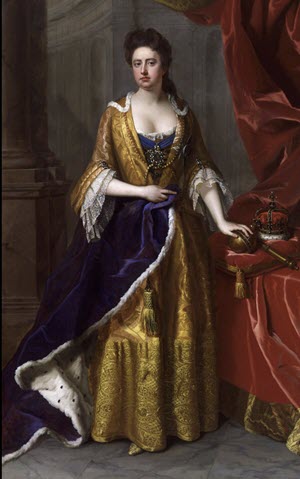
Queen Anne, the second daughter of James II, Anne was a staunch, high church Protestant. During her reign Britain became a major military power and the foundations were laid for the 18th century’s Golden Age.
Anne was plagued by ill health throughout her life, and from her thirties, she grew increasingly ill and obese. Despite seventeen pregnancies by her husband, Prince George of Denmark, she died without surviving issue and was the last monarch of the House of Stuart. Under the Act of Settlement 1701, which excluded all Catholics, she was succeeded by her second cousin George I of the House of Hanover.
|
| 6 | 1704 | - 4 Aug 1704: Gibraltar captured
 Anglo-Dutch forces captured Gibraltar from Spain during the War of the Spanish Succession on behalf of the Habsburg claim to the Spanish throne. The territory was ceded to Great Britain in perpetuity under the Treaty of Utrecht in 1713. During World War II it was an important base for the Royal Navy as it controlled the entrance and exit to the Mediterranean Sea, which is only 8 miles wide at this naval choke point.
The sovereignty of Gibraltar is a point of contention in Anglo-Spanish relations because Spain asserts a claim to the territory. Gibraltarians rejected proposals for Spanish sovereignty in a 1967 referendum and, in a 2002 referendum, the idea of shared sovereignty was also rejected.
|
| 7 | 1707 | - 16 Jan 1707: Kingdom of Great Britain founded

Union of England and Scotland. With its economy almost bankrupted following the collapse of the Darien Scheme, a poorly attended Scottish Parliament voted to agree the Union on 16 January
The early years of the unified kingdom were marked by Jacobite risings which ended in defeat for the Stuart cause at Culloden in 1746. In 1763, victory in the Seven Years' War led to the dominance of the British Empire, which was to become the foremost global power for over a century and slowly grew to become the largest empire in history. The Kingdom of Great Britain was replaced by the United Kingdom of Great Britain and Ireland on 1 January 1801 with the Acts of Union 1800
|
| 8 | 1709 | - 1709: Iron making

Coalbrookdale is a village in the Ironbridge Gorge in Shropshire, England, containing a settlement of great significance in the history of iron ore smelting.
This is where iron ore was first smelted by Abraham Darby using easily mined "coking coal". The coal was drawn from drift mines in the sides of the valley. As it contained far fewer impurities than normal coal, the iron it produced was of a superior quality. Along with many other industrial developments that were going on in other parts of the country, this discovery was a major factor in the growing industrialisation of Britain, which was to become known as the Industrial Revolution.
|
| 9 | 1714 | - 1 Aug 1714—11 Jun 1727: King George I's reign
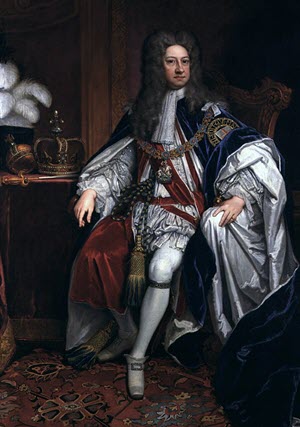
George I ascended the British throne as the first monarch of the House of Hanover. Although over 50 Roman Catholics were closer to his predecessor, Anne by primogeniture, the Act of Settlement 1701 prohibited Catholics from inheriting the British throne; George was Anne's closest living Protestant relative. In reaction, Jacobites attempted to depose George and replace him with Anne's Catholic half-brother, James Francis Edward Stuart, but their attempts failed.
During his reign, the powers of the monarchy diminished and Britain began a transition to the modern system of cabinet government led by a prime minister. Towards the end of his reign, actual political power was held by Robert Walpole, now recognised as Britain's first de facto prime minister. George died of a stroke on a trip to his native Hanover, where he was buried - the last British monarch to be buried outside the UK.
|
| 10 | 1718 | - 1718: Transportation of Convicts Begins

The Transportation Act 1717 introduced penal transportation. People convicted of capital crimes had their sentences commuted to 14 years or life in the Americas. Convicts found guilty of non-capital crimes received seven-year sentences. Between 1718 and 1776, over 50,000 convicts were transported to Virginia and Maryland in the modern United States. The American Revolution made further transportation impossible.
|
| 11 | 1721 | - 3 Apr 1721—11 Feb 1742: Sir Robert Walpole - 1st British Prime Minister
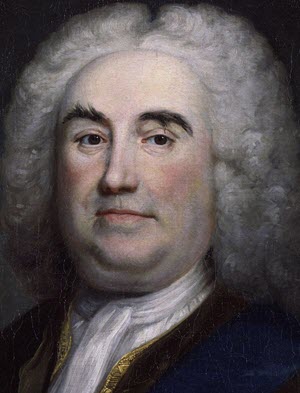
In the wake of the South Sea Bubble financial crisis, Walpole became First Lord of the Treasury and Chancellor of the Exchequer. He never held the title 'Prime Minister,' but was given the powers that came to be associated with the office. George I also gave him 10 Downing Street, still the official residence of the prime minister.
|
| 12 | 1727 | - 11 Jun 1727—25 Oct 1760: King George II's reign
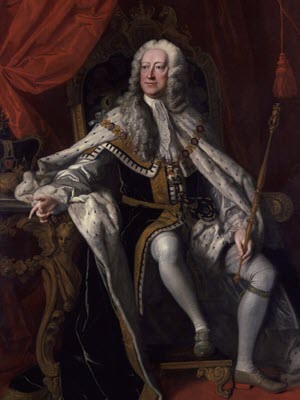
George IIexercised little control over British domestic policy, which was largely controlled by the Parliament of Great Britain. As elector, he spent twelve summers in Hanover, where he had more direct control over government policy.
During the War of the Austrian Succession, George participated at the Battle of Dettingen in 1743, and thus became the last British monarch to lead an army in battle. In 1745, supporters of the Catholic claimant to the British throne, James Francis Edward Stuart ("The Old Pretender"), led by James's son Charles Edward Stuart ("The Young Pretender" or "Bonnie Prince Charlie"), attempted and failed to depose George in the last of the Jacobite rebellions.
|
| 13 | 1731 | |
| 14 | 1733 | - 1733: The Flying Shuttle

The flying shuttle was patented by John Kay in 1733. Its adoption would revolutionize the British textile industry and, in no small part, help spark the industrial revolution. Its basic design was improved over the following years with an important one in 1747
- 24 Mar 1733: Joseph Priestley born

Joseph Priestley was a renowned English theologian, author, chemist and political theorist of the 18th century. He is also regarded by many as the one who discovered oxygen. His contribution to science was so immense that he had been made a member of nearly every major scientific society by the time he passed away
|
| 15 | 1736 | - 1736: James Watt born

James Watt was a Scottish inventor, mechanical engineer, and chemist who improved on Thomas Newcomen's steam engine with his Watt steam engine in 1776, which was fundamental to the changes brought by the Industrial Revolution in both his native Great Britain and the rest of the world.
While working as an instrument maker at the University of Glasgow, Watt became interested in the technology of steam engines. He realised that contemporary engine designs wasted a great deal of energy by repeatedly cooling and reheating the cylinder. Watt introduced a design enhancement, the separate condenser, which avoided this waste of energy and radically improved the power, efficiency, and cost-effectiveness of steam engines.
Watt attempted to commercialise his invention, but experienced great financial difficulties until he entered a partnership with Matthew Boulton in 1775. The new firm of Boulton and Watt was highly successful and Watt became a wealthy man.
|
| 16 | 1742 | - 16 Feb 1742—27 Jul 1743: Earl of Wilmington - 2nd British Prime Minister

Spencer Compton, 1st Earl of Wilmington, KG, PC was a British Whig statesman who served continuously in government from 1715 until his death. He served as the Prime Minister from 1742 until his death in 1743. He is considered to have been Britain's second Prime Minister, after Sir Robert Walpole, but worked closely with the Secretary of State, Lord Carteret, in order to secure the support of the various factions making up the Government.
|
| 17 | 1743 | - 27 Aug 1743—6 Mar 1754: Henry Pelham - 3rd British Prime Minister
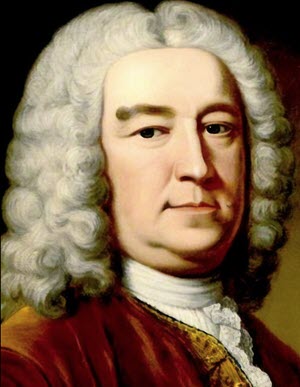
Henry Pelham was a British Whig statesman, who served as Prime Minister of Great Britain from 27 August 1743 until his death.
Pelham's premiership was relatively uneventful in terms of domestic affairs, although it was during his premiership that Great Britain experienced the tumult of the 1745 Jacobite uprising. In foreign affairs, Great Britain fought in several wars. Upon Pelham's death, his brother Newcastle took full control of the ministry.
|
| 18 | 1749 | - 21 Jun 1749: Founding of Halifax

Edward Cornwallis arrived in Chebucto harbour in advance of 2,567 settlers. Work began on the town of Halifax, which replaced Annapolis Royal as the capital of Nova Scotia and established a strong British foothold in Nova Scotia.
Text and image © The Canadian Encyclopedia
|
| 19 | 1750 | - 1750: Highland Clearances begin

Highland Clearances: from the 1750s, landlords in the Scottish Highlands began to forcibly remove tenants from their land, usually to replace them with more profitable sheep farming. The clearances resulted in whole Highland communities leaving Scotland and emigrating, most of them to North America. Many others moved to growing urban industrial centres such as Glasgow
- 1750: Sir Joseph Banks born

Sir Joseph Banks was an English naturalist and botanist whose work paved the way for future-botanists. After inheriting a vast family fortune he could chase his passion, and went on to explore previously uncharted territories. He embarked on a voyage with James Cook aboard HMS Endeavour and returned with a major collection of specimens.
Banks advocated British settlement in New South Wales and colonisation of Australia, as well as the establishment of Botany Bay as a place for the reception of convicts, and advised the British government on all Australian matters. He is credited with introducing the eucalyptus, acacia, and the genus named after him, Banksia, to the Western world. Approximately 80 species of plants bear his name.
|
| 20 | 1754 | - 16 Mar 1754—11 Nov 1756: Duke of Newcastle - 4th British Prime Minister

Thomas Pelham-Holles, 1st Duke of Newcastle upon Tyne and 1st Duke of Newcastle-under-Lyme, was a British Whig statesman, whose official life extended throughout the Whig supremacy of the 18th century. He is commonly known as the Duke of Newcastle. Historian Harry Dickinson says that he became, "Notorious for his fussiness and fretfulness, his petty jealousies, his reluctance to accept responsibility for his actions, and his inability to pursue any political objective to his own satisfaction or to the nations profit ... Many modern historians have depicted him as the epitome of unredeemed mediocrity and as a veritable buffoon in office."
|
| 21 | 1755 | - 28 Jul 1755: Expulsion of the Acadians

Acadian delegates who refused the oath of allegiance were dispersed from Minas, and over the next few months most of the Acadian population of Nova Scotia was rounded up and transported away. About one half of the Acadians perished.
Text and image © The Canadian Encyclopedia
|
| 22 | 1756 | - 16 Nov 1756—29 Jun 1757: Duke of Devonshire - 5th British Prime Minister

William Cavendish, 4th Duke of Devonshire, styled Lord Cavendish before 1729 and Marquess of Hartington between 1729 and 1755, was a British Whig statesman and nobleman who was briefly nominal Prime Minister of Great Britain. The Seven Years' War was going badly for Britain under the leadership of the Duke of Newcastle and when he resigned in October 1756, George II eventually asked Devonshire to form an administration. Devonshire accepted on the condition that his tenure would last only until the end of the parliamentary session. Devonshire believed his duty to the King required an administration capable of prosecuting the war successfully.
|
| 23 | 1757 | - 29 Jun 1757—26 May 1762: Duke of Newcastle - 6th British Prime Minister
Thomas Pelham-Holles, 1st Duke of Newcastle upon Tyne and 1st Duke of Newcastle-under-Lyme, was a British Whig statesman, whose official life extended throughout the Whig supremacy of the 18th century. He is commonly known as the Duke of Newcastle. Historian Harry Dickinson says that he became, "Notorious for his fussiness and fretfulness, his petty jealousies, his reluctance to accept responsibility for his actions, and his inability to pursue any political objective to his own satisfaction or to the nations profit ... Many modern historians have depicted him as the epitome of unredeemed mediocrity and as a veritable buffoon in office."
|
| 24 | 1759 | - 13 Sep 1759: Battle of the Plains of Abraham

On the night of Sept 12-13, General James Wolfe led his soldiers up an unguarded footpath and set for battle before the fortress walls. Montcalm attacked in the morning but his line broke, and Québec fell into British hands. Both generals perished.
Text and image © The Canadian Encyclopedia
|
| 25 | 1760 | - 25 Oct 1760—29 Jan 1820: King George III's reign

George III was the third British monarch of the House of Hanover, but unlike his two predecessors, he was born in Great Britain, spoke English as his first language, and never visited Hanover. His reign was marked by a series of military conflicts involving his kingdoms, much of the rest of Europe, and places farther afield. Early in his reign, Great Britain defeated France in the Seven Years' War, becoming the dominant European power in North America and India. However, many of Britain's American colonies were soon lost in the American War of Independence. Further wars against revolutionary and Napoleonic France from 1793 concluded in the defeat of Napoleon at the Battle of Waterloo in 1815.
Later in life, George III had recurrent mental illness. After a final relapse in 1810, a regency was established, and George III's eldest son, George, Prince of Wales, ruled as Prince Regent.
|
| 26 | 1762 | - 26 May 1762—8 Apr 1763: Earl of Bute - 7th British Prime Minister

John Stuart, 3rd Earl of Bute, was a British nobleman who served as Prime Minister of Great Britain from 1762 to 1763 under George III.
Bute's premiership was notable for the negotiation of the Treaty of Paris (1763) which concluded the Seven Years' War. In so doing, Bute had to soften his previous stance in relation to concessions given to France, in that he agreed that the important fisheries in Newfoundland be returned to France without Britain's possession of Guadeloupe in return.
|
Webmaster Message
I make every effort to document my research. If you have something you would like to add, please contact me.


 1702 - Bef 1728 (< 25 years)


