| |
Date |
Event(s) |
| 1 | 1829 | - 4 Mar 1829—4 Mar 1837: Andrew Jackson - 7th US President

Andrew Jackson (March 15, 1767 – June 8, 1845) was an American military hero and statesman who served as the seventh president of the United States from 1829 to 1837. As president, Jackson sought to advance the rights of the "common man" against a "corrupt aristocracy" and to preserve the Union.
Jackson faced the threat of secession by South Carolina over the "Tariff of Abominations." The crisis was defused when the tariff was amended, and Jackson threatened the use of military force if South Carolina attempted to secede. In 1835, Jackson became the only president to completely pay off the national debt. In 1830, Jackson signed the Indian Removal Act, which forcibly relocated most members of the Native American tribes in the South to Indian Territory. His administration concluded a "most favored nation" treaty with Great Britain, settled claims of damages against France from the Napoleonic Wars, and recognized the Republic of Texas. In January 1835, he survived the first assassination attempt on a sitting president.
|
| 2 | 1830 | - 26 Jun 1830—20 Jun 1837: King William IV's reign

William IV was King of the United Kingdom of Great Britain and Ireland from 26 June 1830 until his death in 1837. The third son of George III, William succeeded his elder brother George IV, becoming the last king and penultimate monarch of Britain's House of Hanover.
William served in the Royal Navy in his youth and was nicknamed the "Sailor King". In 1789, he was created Duke of Clarence and St Andrews. In 1827, he was appointed as Britain's first Lord High Admiral since 1709. As his two older brothers died without leaving legitimate issue, he inherited the throne when he was 64 years old. His reign saw several reforms: the poor law was updated, child labour restricted, slavery abolished in nearly all of the British Empire, and the British electoral system refashioned by the Reform Act 1832. He was the last monarch to appoint a prime minister contrary to the will of Parliament.
At the time of his death William had no surviving legitimate children. He was succeeded by his niece Victoria and in Hanover by his brother Ernest Augustus.
|
| 3 | 1834 | - 10 Dec 1834—8 Apr 1835: Robert Peel - 29th British Prime Minister

Sir Robert Peel, 2nd Baronet, (5 February 1788 – 2 July 1850) was a British statesman and Conservative Party politician who served twice as Prime Minister of the United Kingdom (1834–35 and 1841–46) and twice as Home Secretary (1822–27 and 1828–30). He is regarded as the father of modern British policing and as one of the founders of the modern Conservative Party.
His first administration was a minority government, dependent on Whig support and with Peel serving as his own Chancellor of the Exchequer. After only four months, his government collapsed and he served as Leader of the Opposition during the second government of the Viscount Melbourne (1835–1841).
|
| 4 | 1835 | - 18 Apr 1835—30 Aug 1841: Viscount Melbourne - 30th British Prime Minister

William Lamb, 2nd Viscount Melbourne, (15 March 1779 – 24 November 1848) was a British Whig statesman who served as Home Secretary (1830–1834) and Prime Minister (1834 and 1835–1841). He is best known for his intense and successful mentoring of Queen Victoria in the ways of politics, when she was between the ages of 18 and 21. Historians have concluded that Melbourne does not rank highly as a Prime Minister, for there were no great foreign wars or domestic issues to handle, he lacked major achievements, and he enunciated no grand principles. "But he was kind, honest and not self-seeking."
Melbourne was Prime Minister on two occasions. The first ended when he was dismissed by King William IV in 1834, the last British prime minister to be dismissed by a monarch. Six months later he was re-appointed and served for six years.
- 2 Oct 1835—21 Apr 1836: Texas War for Independence

The Texas Revolution was a rebellion of colonists from the United States and Tejanos (Texas Mexicans) in putting up armed resistance to the centralist government of Mexico.
While the uprising was part of a larger one that included other provinces opposed to the regime of President Antonio López de Santa Anna, the Mexican government believed the United States had instigated the Texas insurrection with the goal of annexation. The Mexican Congress passed the Tornel Decree, declaring that any foreigners fighting against Mexican troops "will be deemed pirates and dealt with as such, being citizens of no nation presently at war with the Republic and fighting under no recognized flag." Only the province of Texas succeeded in breaking with Mexico, establishing the Republic of Texas, and eventually being annexed by the United States.
The annexation of Texas as the 28th state of the United States, in 1845, led directly to the Mexican–American War.
|
| 5 | 1836 | - 21 Jul 1836: First Railway Opens in Canada

Canada's first railway, the Champlain and St Lawrence Railroad, officially opened; it began operations on July 25. The railway heralded the most important change in transportation in Canadian history.
Text and image © The Canadian Encyclopedia
|
| 6 | 1837 | - 4 Mar 1837—4 Mar 1841: Martin Van Buren - 8th US President

Martin Van Buren (December 5, 1782 – July 24, 1862) was the eighth president of the United States from 1837 to 1841. A founder of the Democratic Party, he previously served as the ninth governor of New York, the tenth U.S. secretary of state, and the eighth vice president of the United States. He won the 1836 presidential election with the endorsement of popular outgoing President Andrew Jackson and the organizational strength of the Democratic Party.
The president proposed the establishment of an independent US treasury, which he contended would take the politics out of the nation's money supply. Under the plan, the government would hold all of its money balances in the form of gold or silver, and would be restricted from printing paper money at will; both measures were designed to prevent inflation. The plan would permanently separate the government from private banks by storing government funds in government vaults rather than in private banks
- 20 Jun 1837—22 Jan 1901: Queen Victoria's reign

Victoria was Queen of the United Kingdom of Great Britain and Ireland from 20 June 1837 until her death. On 1 May 1876, she adopted the additional title of Empress of India.
Victoria inherited the throne at the age of 18, after her father's three elder brothers had all died leaving no surviving legitimate children. She became a national icon who was identified with strict standards of personal morality. Victoria married her first cousin Prince Albert. After his death in 1861, Victoria plunged into deep mourning and avoided public appearances. As a result, republicanism temporarily gained strength but in the latter half of her reign, her popularity recovered. Her Golden and Diamond Jubilees were times of public celebration.
- 1 Jul 1837: Registration of BMDs begins

Before 1837, there was no national system of civil registration in England and Wales. Baptisms, marriages and burials were recorded in parish registers maintained by Church of England clergy. With the increase in nonconformity baptisms, marriages and burials were going unrecorded. The Parochial Registers Act of 1812 did not recognise the church registers of Nonconformists. Eventually, this led to the 1836 Registration and Marriage Acts
- 16 Nov 1837: Insurrection in Lower Canada

Governor Gosford issued warrants for the arrest of 26 Patriote leaders on charges of high treason, initiating the events of the Lower Canada Rebellion. Troops and Patriotes were in battle a few days later.
Text and image © The Canadian Encyclopedia
- 5 Dec 1837: Rebellion in Upper Canada

William Lyon Mackenzie led a rag-tag contingent of 800 men down Yonge Street toward Toronto. Government loyalists dispersed the rebels with a few shots, ending Mackenzie's erratic attempt to overthrow the colonial government.
Text and image © The Canadian Encyclopedia
|
| 7 | 1840 | - 1840: Houses of Parliament

More correctly known as the Palace of Westminster, the Houses of Parliament are the meeting places of the Houses of Commons and Lords. The name is from the neighbouring Westminster Abbey.While the present buildings make look as though they date from the Gothic Period of the 14th and 15th Centuries, they were built between 1840 and 1870 following the 1834 fire
- 1840: British Migration to New Zealand begins

British Migration to New Zealand: In early 19th C, Britain conditions were such that millions set off for the New World. By 1839 there were only 2,000 immigrants in New Zealand, by 1852, 28,000. The decisive moment for this change was 1840 when the Treaty of Waitangi was signed. This established British authority in European eyes, and gave British immigrants legal rights as citizens. The treaty helped ensure that for 100+ years, most immigrants would come from the UK
|
| 8 | 1841 | - 4 Feb 1841—4 Apr 1841: William Henry Harrison - 9th US President

William Henry Harrison Sr. (February 9, 1773 – April 4, 1841) was an American military officer, politician, and the ninth president of the United States. He died of pneumonia thirty-one days into his term, thereby serving the shortest tenure in United States presidential history. Because he was the first president to die in office, his death sparked a constitutional crisis and questions and debates about the presidential line of succession.
He took the oath of office on Thursday, March 4, 1841, a cold and wet day. He wore neither an overcoat nor hat, rode on horseback to the ceremony rather than in the closed carriage that had been offered him, and delivered the longest inaugural address in American history, at 8,445 words
- 4 Apr 1841—4 Mar 1845: John Tyler - 10th US President

John Tyler (March 29, 1790 – January 18, 1862) was the tenth president of the United States from 1841 to 1845 after briefly being the tenth vice president (1841); he was elected to the latter office on the 1840 Whig ticket with President William Henry Harrison.
Tyler ascended to the presidency after Harrison's death in April 1841, only a month after the start of the new administration. He was a supporter of states' rights, and as president he adopted nationalist policies only when they did not infringe on the powers of the states.
- 30 Aug 1841—29 Jun 1846: Robert Peel - 31st British Prime Minister
Sir Robert Peel, 2nd Baronet, (5 February 1788 – 2 July 1850) was a British statesman and Conservative Party politician who served twice as Prime Minister of the United Kingdom (1834–35 and 1841–46) and twice as Home Secretary (1822–27 and 1828–30). He is regarded as the father of modern British policing and as one of the founders of the modern Conservative Party.
His second government ruled for five years. He cut tariffs to stimulate trade; to replace the lost revenue he pushed through a 3% income tax. He played a central role in making free trade a reality and set up a modern banking system.
|
| 9 | 1842 | - 1842: Income Tax
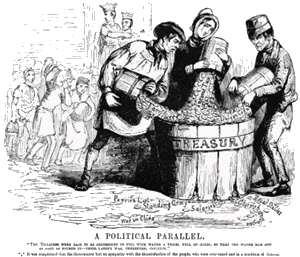
Following the end of the Napoleonic War in 1815, the public mood of compliance with income tax rapidly evaporated. The government wanted to retain it to help reduce the National Debthowever, strong public opposition to the tax was demonstrated by landowners, merchants, manufacturers, bankers, and tradesmen. On 18 March 1816, the government was narrowly defeated on the issue and was forced to abandon it.
By the early 1840s business opinion had moved towards 'free trade' and the removal of high protective duties on imports and exports. Sir Robert Peel, the Prime Minister, was keen to facilitate this thinking. In 1842, therefore, he re-introduced income tax at 7d in the pound on incomes over £150. This allowed him to remove import and export duties on more than 700 items.
- 1842: First Chemical Fertiliser

Sir John Bennet Lawes, 1st Baronet, FRS (28 December 1814 – 31 August 1900) was an English entrepreneur and agricultural scientist. He founded an experimental farm at his home at Rothamsted Manor that eventually became the Rothamsted Experimental Station, where he developed and, in 1842, patented a superphosphate that would mark the beginnings of the chemical fertilizer industry
|
| 10 | 1843 | - 1843: SS Great Britain Launched
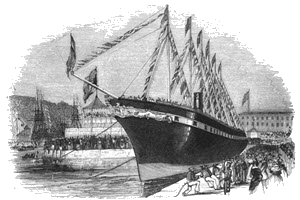
SS Great Britain is a museum ship and former passenger steamship, and was advanced for her time. She was the longest passenger ship in the world from 1845 to 1854. She was designed by Isambard Kingdom Brunel (1806–1859), for the Great Western Steamship Company's transatlantic service between Bristol and New York. While other ships had been built of iron or equipped with a screw propeller, the Great Britain was the first to combine these features in a large ocean-going ship. She was the first iron steamer to cross the Atlantic, which she did in 1845, in 14 days.
|
| 11 | 1845 | - 4 Mar 1845—4 Mar 1849: James K Polk - 11th US President

James Knox Polk (November 2, 1795 – June 15, 1849) was the 11th president of the United States (1845–1849). A protégé of Andrew Jackson, he was a member of the Democratic Party and an advocate of Jacksonian democracy.
During Polk's presidency, the United States expanded significantly with the annexation of the Republic of Texas, the Oregon Territory, and the Mexican Cession following the American victory in the Mexican–American War.
|
| 12 | 1846 | - 25 Apr 1846—3 Feb 1848: Mexican–American War

The Mexican–American War, was an armed conflict between the United States of America and Mexico. It followed the 1845 American annexation of the independent Republic of Texas. The unstable Mexican caudillo leadership of President/General Antonio López de Santa Anna still considered Texas to be its northeastern province and never recognized the Republic of Texas, which had seceded a decade earlier. In 1845, newly elected U.S. President James K. Polk sent troops to the disputed area and a diplomatic mission to Mexico. After Mexican forces attacked American forces, Polk cited this in his request that Congress declare war.
The 1848 Treaty of Guadalupe Hidalgo, ended the war and enforced the Mexican Cession of the northern territories of Alta California and Santa Fe de Nuevo México to the United States. The U.S. agreed to pay $15 million compensation for the physical damage of the war and assumed $3.25 million of debt already owed earlier by the Mexican government to U.S. citizens. Mexico acknowledged the loss of what became the State of Texas and accepted the Rio Grande as its northern border with the U.S.
- 15 Jun 1846: Oregon Boundary Treaty

The Oregon Boundary Treaty was signed, establishing the boundary between British North America and the US at 49° north latitude, leaving Vancouver Island in British hands, and creating a settlement with which Canada and the US could live in harmony.
Text © The Canadian Encyclopedia
- 30 Jun 1846—21 Feb 1852: John Russell - 32nd British Prime Minister

John Russell, 1st Earl Russell, (18 August 1792 – 28 May 1878), known by his courtesy title Lord John Russell before 1861, was a leading Whig and Liberal politician who served as Prime Minister of the United Kingdom on two occasions during the early Victorian era.
He headed a government that failed to deal with the Irish Potato Famine, a disaster which saw the loss of a quarter of that country's population. It has been said that his ministry of 1846 to 1852 was the ruin of the Whig party: it never composed a Government again, and his ministry of 1865 to 1866 was very nearly the ruin of the Liberal Party also.
- 22 Oct 1846: First Telegraph in Canada

The Toronto, Hamilton, Niagara and St Catharines Telegraph Company was established, the first telegraph company in Canada. The first section was opened for use 19 Dec 1846 from Toronto to Hamilton. The telegraph profoundly altered 19th century life.
Text and image © The Canadian Encyclopedia
|
| 13 | 1847 | - 1847: Alexander Graham Bell born

Alexander Graham Bell was a Scottish-born scientist, inventor, engineer, and innovator who is credited with inventing and patenting the first practical telephone. He also founded the American Telephone and Telegraph Company (AT&T) in 1885.
Bell's father, grandfather, and brother had all been associated with work on elocution and speech and both his mother and wife were deaf, profoundly influencing Bell's life's work. His research on hearing and speech further led him to experiment with hearing devices which eventually culminated in Bell being awarded the first U.S. patent for the telephone in 1876. Bell considered his invention an intrusion on his real work as a scientist and refused to have a telephone in his study
|
| 14 | 1848 | - 2 Feb 1848: Responsible Government in Nova Scotia

James Boyle Uniake became leader of a new Reform government. Nova Scotia was thus the first colony in the British Empire in which responsible government was in effect. Responsible government meant that a colony enjoyed complete self-government in domestic affairs and that a government ruled only with the support of the majority of the elected Assembly (the origins of today's cabinet government).
The Nova Scotian patriot par excellence, Howe (pictured) could use his oratorical powers to influence his compatriots as no other man has ever done (courtesy Library and Archives Canada/C-22002).
Text and image © The Canadian Encyclopedia
|
| 15 | 1849 | - 4 Mar 1849—9 Jul 1850: Zachary Taylor - 12th US President

Zachary Taylor (November 24, 1784 – July 9, 1850) was the 12th president of the United States, serving from March 1849 until his death in July 1850.
Taylor previously was a career officer in the United States Army, rose to the rank of major general and became a national hero as a result of his victories in the Mexican–American War. As a result, he won election to the White House despite his vague political beliefs. His top priority as president was preserving the Union, but he died sixteen months into his term, before making any progress on the status of slavery, which had been inflaming tensions in Congress.
|
| 16 | 1850 | - 9 Jul 1850—4 Mar 1853: Millard Fillmore 13th US President

Millard Fillmore (January 7, 1800 – March 8, 1874) was the 13th president of the United States (1850–1853), the last to be a member of the Whig Party while in the White House.
A former U.S. Representative from New York, Fillmore was elected the nation's 12th vice president in 1848, and was elevated to the presidency by the death of Zachary Taylor. He was instrumental in getting the Compromise of 1850 passed, a bargain that led to a brief truce in the battle over slavery. He failed to win the Whig nomination for president in 1852; he gained the endorsement of the nativist Know Nothing Party four years later, and finished third in that election.
|
| 17 | 1851 | - 1851: The Great Exhibition

The Great Exhibition of the Works of Industry of All Nations or The Great Exhibition, sometimes referred to as the Crystal Palace Exhibition in reference to the temporary structure in which it was held, was an international exhibition that took place in Hyde Park, London, from 1 May to 15 October 1851. It was the first in a series of World's Fairs, exhibitions of culture and industry that became popular in the 19th century, and it was a much anticipated event. It was organized by Henry Cole and Prince Albert, husband of the reigning monarch, Queen Victoria. It was attended by famous people of the time,
|
| 18 | 1852 | - 23 Feb 1852—17 Dec 1852: Earl of Derby - 33rd British Prime Minister

Edward George Geoffrey Smith-Stanley, 14th Earl of Derby, (29 March 1799 – 23 October 1869) was a British statesman, three-time Prime Minister of the United Kingdom and, to date, the longest-serving leader of the Conservative Party. He was known before 1834 as Edward Stanley, and from 1834 to 1851 as Lord Stanley. He is one of only four British prime ministers to have three or more separate periods in office. However, his ministries all lasted less than two years and totalled three years and 280 days.
Derby formed a minority government in February 1852 following the collapse of Lord John Russell's Whig Government. When the aged Duke of Wellington, by then very deaf, heard the list of inexperienced cabinet ministers being read aloud in the House of Lords, he gave the government its nickname by shouting "Who? Who?" From then this government would be known as the "Who, Who" government
- 19 Dec 1852—30 Jan 1855: Earl of Aberdeen - 34th British Prime Minister

George Hamilton-Gordon, 4th Earl of Aberdeen, (28 January 1784 – 14 December 1860), was a British statesman, diplomat and landowner, successively a Tory, Conservative and Peelite politician, who served as Prime Minister from 1852 until 1855 in a coalition between the Whigs and Peelites, with Radical and Irish support.
The Aberdeen ministry was filled with powerful and talented politicians, whom Aberdeen was largely unable to control and direct. Despite trying to avoid this happening, it took Britain into the Crimean War, and fell when its conduct became unpopular, after which Aberdeen retired from politics.
|
| 19 | 1853 | - 4 Mar 1853—4 Mar 1857: Franklin Pierce - 14th US President

Franklin Pierce (November 23, 1804 – October 8, 1869) was the 14th president of the United States (1853–1857), a northern Democrat who saw the abolitionist movement as a fundamental threat to the unity of the nation.
He alienated anti-slavery groups by championing and signing the Kansas–Nebraska Act and enforcing the Fugitive Slave Act, yet he failed to stem conflict between North and South, setting the stage for Southern secession and the American Civil War.
|
| 20 | 1854 | - 1854—1856: Crimean War

The Crimean War was fought by an alliance of Britain, France, Turkey and Sardinia against Russian expansion into the Danube region (modern day Romania). One battle - The Battle of Balaclava - became famous for the Charge of the Light Brigade The Crimean war also saw the rise to prominence of Florence Nightingale.
|
| 21 | 1855 | - 6 Feb 1855—19 Feb 1858: Viscount Palmerston - 35th British Prime Minister

Henry John Temple, 3rd Viscount Palmerston, (20 October 1784 – 18 October 1865) was a British statesman who served twice as Prime Minister in the mid-19th century. Palmerston dominated British foreign policy during the period 1830 to 1865, when Britain was at the height of her imperial power. He held office almost continuously from 1807 until his death in 1865. He began his parliamentary career as a Tory, defected to the Whigs in 1830, and became the first Prime Minister of the newly formed Liberal Party in 1859.
He had two periods in office, 1855–1858 and 1859–1865, before his death at the age of 80 years, a few months subsequent to victory in a general election in which he had achieved an increased majority. He remains, to date, the last Prime Minister to die in office.
|
Webmaster Message
I make every effort to document my research. If you have something you would like to add, please contact me.


