| |
Date |
Event(s) |
| 1 | 1829 | - 4 Mar 1829—4 Mar 1837: Andrew Jackson - 7th US President

Andrew Jackson (March 15, 1767 – June 8, 1845) was an American military hero and statesman who served as the seventh president of the United States from 1829 to 1837. As president, Jackson sought to advance the rights of the "common man" against a "corrupt aristocracy" and to preserve the Union.
Jackson faced the threat of secession by South Carolina over the "Tariff of Abominations." The crisis was defused when the tariff was amended, and Jackson threatened the use of military force if South Carolina attempted to secede. In 1835, Jackson became the only president to completely pay off the national debt. In 1830, Jackson signed the Indian Removal Act, which forcibly relocated most members of the Native American tribes in the South to Indian Territory. His administration concluded a "most favored nation" treaty with Great Britain, settled claims of damages against France from the Napoleonic Wars, and recognized the Republic of Texas. In January 1835, he survived the first assassination attempt on a sitting president.
|
| 2 | 1830 | - 26 Jun 1830—20 Jun 1837: King William IV's reign

William IV was King of the United Kingdom of Great Britain and Ireland from 26 June 1830 until his death in 1837. The third son of George III, William succeeded his elder brother George IV, becoming the last king and penultimate monarch of Britain's House of Hanover.
William served in the Royal Navy in his youth and was nicknamed the "Sailor King". In 1789, he was created Duke of Clarence and St Andrews. In 1827, he was appointed as Britain's first Lord High Admiral since 1709. As his two older brothers died without leaving legitimate issue, he inherited the throne when he was 64 years old. His reign saw several reforms: the poor law was updated, child labour restricted, slavery abolished in nearly all of the British Empire, and the British electoral system refashioned by the Reform Act 1832. He was the last monarch to appoint a prime minister contrary to the will of Parliament.
At the time of his death William had no surviving legitimate children. He was succeeded by his niece Victoria and in Hanover by his brother Ernest Augustus.
- 22 Nov 1830—9 Jul 1834: Earl Grey - 26th British Prime Minister

Charles Grey, 2nd Earl Grey, (13 March 1764 – 17 July 1845), known as Viscount Howick between 1806 and 1807, was a member of the Whig Party and was a long-time leader of multiple reform movements, most famously the Reform Act 1832. His government also saw the abolition of slavery in the British Empire, in which the government purchased slaves from their owners in 1833. Grey was a strong opponent of the foreign and domestic policies of William Pitt the Younger in the 1790s. In 1807, he resigned as foreign secretary to protest the King's uncompromising rejection of Catholic Emancipation. Grey finally resigned in 1834 over disagreements in his cabinet regarding Ireland, and retired from politics.
Earl Grey tea is named after him.
|
| 3 | 1832 | - 1 Jan 1832: Cholera Epidemic Spreads

Grosse Île, near Québec, was opened as a quarantine station during the cholera epidemics and all ships stopped there for inspection. This station was a futile attempt by the government to control the disease that killed up to 10% of the population.
Text and image © The Canadian Encyclopedia
- 6 Apr 1832—27 Aug 1832: Black Hawk War

The Black Hawk War was a brief conflict between the United States and Native Americans led by Black Hawk, a Sauk leader. The war erupted soon after Black Hawk and a group of Sauks, Meskwakis, and Kickapoos, known as the "British Band", crossed the Mississippi River, into the U.S. state of Illinois, from Iowa Indian Territory in April 1832. Black Hawk's motives were ambiguous, but he was apparently hoping to avoid bloodshed while resettling on tribal land that had been ceded to the United States in the disputed 1804 Treaty of St. Louis.
The war gave the young captain Abraham Lincoln his brief military service, although he never participated in a battle. Other participants who later became famous included Winfield Scott, Zachary Taylor, and Jefferson Davis. The war gave impetus to the U.S. policy of Indian removal, in which Native American tribes were pressured to sell their lands and move west of the Mississippi River and stay there.
|
| 4 | 1833 | - 1833: Slavery Abolition Act

The Slavery Abolition Act abolished slavery in the British Empire. This Act expanded the jurisdiction of the Slave Trade Act 1807 which made the purchase or ownership of slaves illegal within the British Empire, with the exception "of the Territories in the Possession of the East India Co", Ceylon (Sri Lanka), & Saint Helena. The Act was repealed in 1997 as part of a review of English statute but later anti-slavery legislation remains
|
| 5 | 1834 | - 1834: New Poor Law reforms Britain's social security system

In 1832, a Royal Commission into the Poor Law recommended changes to the system of parish poor relief. Many of its recommendations were incorporated into the Poor Law Amendment Act of 1834.
This statute maintained outdoor relief (relief given outside a workhouse), but led to more central control of the system
- 1834: The Workhouse

The Workhouse originated in the Poor Law Act 1388 but mass unemployment after the Napoleonic Wars, & the introduction of technology to replace agricultural workers meant the established system was unsustainable. The Poor Law of 1834 discouraged the provision of relief to anyone who refused to enter a workhouse. Life in a workhouse was harsh but in the provision of free medical care & education for children inmates were advantaged over the general population
- 16 Jul 1834—14 Nov 1834: Viscount Melbourne - 27th British Prime Minister

William Lamb, 2nd Viscount Melbourne, (15 March 1779 – 24 November 1848) was a British Whig statesman who served as Home Secretary (1830–1834) and Prime Minister (1834 and 1835–1841). He is best known for his intense and successful mentoring of Queen Victoria in the ways of politics, when she was between the ages of 18 and 21. Historians have concluded that Melbourne does not rank highly as a Prime Minister, for there were no great foreign wars or domestic issues to handle, he lacked major achievements, and he enunciated no grand principles. "But he was kind, honest and not self-seeking."
Melbourne was Prime Minister on two occasions. The first ended when he was dismissed by King William IV in 1834, the last British prime minister to be dismissed by a monarch. Six months later he was re-appointed and served for six years.
- 17 Nov 1834—9 Dec 1834: Duke of Wellington - 28th British Prime Minister

Arthur Wellesley, 1st Duke of Wellington, (1 May 1769 – 14 September 1852) was an Anglo-Irish soldier and Tory statesman who was one of the leading military and political figures of 19th-century Britain, serving twice as Prime Minister. His victory against Napoleon at the Battle of Waterloo in 1815 puts him in the first rank of Britain's military heroes.
This, his second term as PM, was a caretaker role until a new leader was found.
- 10 Dec 1834—8 Apr 1835: Robert Peel - 29th British Prime Minister

Sir Robert Peel, 2nd Baronet, (5 February 1788 – 2 July 1850) was a British statesman and Conservative Party politician who served twice as Prime Minister of the United Kingdom (1834–35 and 1841–46) and twice as Home Secretary (1822–27 and 1828–30). He is regarded as the father of modern British policing and as one of the founders of the modern Conservative Party.
His first administration was a minority government, dependent on Whig support and with Peel serving as his own Chancellor of the Exchequer. After only four months, his government collapsed and he served as Leader of the Opposition during the second government of the Viscount Melbourne (1835–1841).
|
| 6 | 1835 | - 18 Apr 1835—30 Aug 1841: Viscount Melbourne - 30th British Prime Minister
William Lamb, 2nd Viscount Melbourne, (15 March 1779 – 24 November 1848) was a British Whig statesman who served as Home Secretary (1830–1834) and Prime Minister (1834 and 1835–1841). He is best known for his intense and successful mentoring of Queen Victoria in the ways of politics, when she was between the ages of 18 and 21. Historians have concluded that Melbourne does not rank highly as a Prime Minister, for there were no great foreign wars or domestic issues to handle, he lacked major achievements, and he enunciated no grand principles. "But he was kind, honest and not self-seeking."
Melbourne was Prime Minister on two occasions. The first ended when he was dismissed by King William IV in 1834, the last British prime minister to be dismissed by a monarch. Six months later he was re-appointed and served for six years.
- 2 Oct 1835—21 Apr 1836: Texas War for Independence

The Texas Revolution was a rebellion of colonists from the United States and Tejanos (Texas Mexicans) in putting up armed resistance to the centralist government of Mexico.
While the uprising was part of a larger one that included other provinces opposed to the regime of President Antonio López de Santa Anna, the Mexican government believed the United States had instigated the Texas insurrection with the goal of annexation. The Mexican Congress passed the Tornel Decree, declaring that any foreigners fighting against Mexican troops "will be deemed pirates and dealt with as such, being citizens of no nation presently at war with the Republic and fighting under no recognized flag." Only the province of Texas succeeded in breaking with Mexico, establishing the Republic of Texas, and eventually being annexed by the United States.
The annexation of Texas as the 28th state of the United States, in 1845, led directly to the Mexican–American War.
|
| 7 | 1836 | - 21 Jul 1836: First Railway Opens in Canada

Canada's first railway, the Champlain and St Lawrence Railroad, officially opened; it began operations on July 25. The railway heralded the most important change in transportation in Canadian history.
Text and image © The Canadian Encyclopedia
|
| 8 | 1837 | - 4 Mar 1837—4 Mar 1841: Martin Van Buren - 8th US President

Martin Van Buren (December 5, 1782 – July 24, 1862) was the eighth president of the United States from 1837 to 1841. A founder of the Democratic Party, he previously served as the ninth governor of New York, the tenth U.S. secretary of state, and the eighth vice president of the United States. He won the 1836 presidential election with the endorsement of popular outgoing President Andrew Jackson and the organizational strength of the Democratic Party.
The president proposed the establishment of an independent US treasury, which he contended would take the politics out of the nation's money supply. Under the plan, the government would hold all of its money balances in the form of gold or silver, and would be restricted from printing paper money at will; both measures were designed to prevent inflation. The plan would permanently separate the government from private banks by storing government funds in government vaults rather than in private banks
- 20 Jun 1837—22 Jan 1901: Queen Victoria's reign

Victoria was Queen of the United Kingdom of Great Britain and Ireland from 20 June 1837 until her death. On 1 May 1876, she adopted the additional title of Empress of India.
Victoria inherited the throne at the age of 18, after her father's three elder brothers had all died leaving no surviving legitimate children. She became a national icon who was identified with strict standards of personal morality. Victoria married her first cousin Prince Albert. After his death in 1861, Victoria plunged into deep mourning and avoided public appearances. As a result, republicanism temporarily gained strength but in the latter half of her reign, her popularity recovered. Her Golden and Diamond Jubilees were times of public celebration.
- 1 Jul 1837: Registration of BMDs begins

Before 1837, there was no national system of civil registration in England and Wales. Baptisms, marriages and burials were recorded in parish registers maintained by Church of England clergy. With the increase in nonconformity baptisms, marriages and burials were going unrecorded. The Parochial Registers Act of 1812 did not recognise the church registers of Nonconformists. Eventually, this led to the 1836 Registration and Marriage Acts
- 16 Nov 1837: Insurrection in Lower Canada

Governor Gosford issued warrants for the arrest of 26 Patriote leaders on charges of high treason, initiating the events of the Lower Canada Rebellion. Troops and Patriotes were in battle a few days later.
Text and image © The Canadian Encyclopedia
- 5 Dec 1837: Rebellion in Upper Canada

William Lyon Mackenzie led a rag-tag contingent of 800 men down Yonge Street toward Toronto. Government loyalists dispersed the rebels with a few shots, ending Mackenzie's erratic attempt to overthrow the colonial government.
Text and image © The Canadian Encyclopedia
|
| 9 | 1840 | - 1840: Houses of Parliament

More correctly known as the Palace of Westminster, the Houses of Parliament are the meeting places of the Houses of Commons and Lords. The name is from the neighbouring Westminster Abbey.While the present buildings make look as though they date from the Gothic Period of the 14th and 15th Centuries, they were built between 1840 and 1870 following the 1834 fire
- 1840: British Migration to New Zealand begins

British Migration to New Zealand: In early 19th C, Britain conditions were such that millions set off for the New World. By 1839 there were only 2,000 immigrants in New Zealand, by 1852, 28,000. The decisive moment for this change was 1840 when the Treaty of Waitangi was signed. This established British authority in European eyes, and gave British immigrants legal rights as citizens. The treaty helped ensure that for 100+ years, most immigrants would come from the UK
|
| 10 | 1841 | - 4 Feb 1841—4 Apr 1841: William Henry Harrison - 9th US President

William Henry Harrison Sr. (February 9, 1773 – April 4, 1841) was an American military officer, politician, and the ninth president of the United States. He died of pneumonia thirty-one days into his term, thereby serving the shortest tenure in United States presidential history. Because he was the first president to die in office, his death sparked a constitutional crisis and questions and debates about the presidential line of succession.
He took the oath of office on Thursday, March 4, 1841, a cold and wet day. He wore neither an overcoat nor hat, rode on horseback to the ceremony rather than in the closed carriage that had been offered him, and delivered the longest inaugural address in American history, at 8,445 words
- 4 Apr 1841—4 Mar 1845: John Tyler - 10th US President

John Tyler (March 29, 1790 – January 18, 1862) was the tenth president of the United States from 1841 to 1845 after briefly being the tenth vice president (1841); he was elected to the latter office on the 1840 Whig ticket with President William Henry Harrison.
Tyler ascended to the presidency after Harrison's death in April 1841, only a month after the start of the new administration. He was a supporter of states' rights, and as president he adopted nationalist policies only when they did not infringe on the powers of the states.
- 30 Aug 1841—29 Jun 1846: Robert Peel - 31st British Prime Minister
Sir Robert Peel, 2nd Baronet, (5 February 1788 – 2 July 1850) was a British statesman and Conservative Party politician who served twice as Prime Minister of the United Kingdom (1834–35 and 1841–46) and twice as Home Secretary (1822–27 and 1828–30). He is regarded as the father of modern British policing and as one of the founders of the modern Conservative Party.
His second government ruled for five years. He cut tariffs to stimulate trade; to replace the lost revenue he pushed through a 3% income tax. He played a central role in making free trade a reality and set up a modern banking system.
|
| 11 | 1842 | - 1842: Income Tax
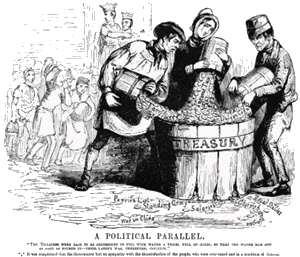
Following the end of the Napoleonic War in 1815, the public mood of compliance with income tax rapidly evaporated. The government wanted to retain it to help reduce the National Debthowever, strong public opposition to the tax was demonstrated by landowners, merchants, manufacturers, bankers, and tradesmen. On 18 March 1816, the government was narrowly defeated on the issue and was forced to abandon it.
By the early 1840s business opinion had moved towards 'free trade' and the removal of high protective duties on imports and exports. Sir Robert Peel, the Prime Minister, was keen to facilitate this thinking. In 1842, therefore, he re-introduced income tax at 7d in the pound on incomes over £150. This allowed him to remove import and export duties on more than 700 items.
- 1842: First Chemical Fertiliser

Sir John Bennet Lawes, 1st Baronet, FRS (28 December 1814 – 31 August 1900) was an English entrepreneur and agricultural scientist. He founded an experimental farm at his home at Rothamsted Manor that eventually became the Rothamsted Experimental Station, where he developed and, in 1842, patented a superphosphate that would mark the beginnings of the chemical fertilizer industry
|
Webmaster Message
I make every effort to document my research. If you have something you would like to add, please contact me.


 1832 - 1842 (10 years)

